




 Отправить статью по E-mail


Заимствование в русском языке новейшего периода: сопутствующие языковые процессы
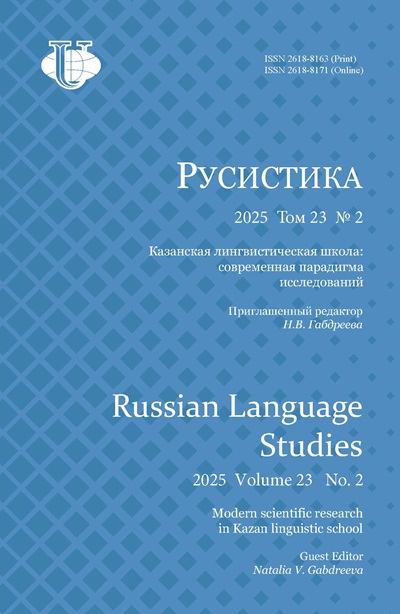
- Авторы: Габдреева Н.В.1, Агеева А.В.1
-
Учреждения:
- Казанский (Приволжский) федеральный университет
- Выпуск: Том 23, № 2 (2025): КАЗАНСКАЯ ЛИНГВИСТИЧЕСКАЯ ШКОЛА: СОВРЕМЕННАЯ ПАРАДИГМА ИССЛЕДОВАНИЙ
- Страницы: 225-240
- Раздел: Актуальные проблемы исследований русского языка
- URL: https://journals.rudn.ru/russian-language-studies/article/view/45031
- DOI: https://doi.org/10.22363/2618-8163-2025-23-2-225-240
- EDN: https://elibrary.ru/FHVPNE
- ID: 45031
Цитировать

Аннотация
Рассмотрены основные лингвистические процессы, сопутствующие заимствованию в русском языке новейшего периода. Актуальность исследования определяется современными взглядами на языковую систему как на сложное синергетически организованное целое, находящееся в постоянном контакте с внешними ресурсами и характеризующееся динамичным развитием. Цель исследования - систематизация процессуальных характеристик всестороннего включения иноязычной лексики в лексическую систему русского языка на современном этапе. Материалом работы выступают данные онлайн-версий русскоязычных периодических изданий, включающие журналистские статьи и комментарии читателей. Методология работы основана на применении модели динамической синхронии, позволяющей зафиксировать и описать в развитии основные лингвистические процессы, сопровождающие трансфер языковых единиц. установлены основные тренды развития корпуса новейшей иноязычной лексики русского языка на основных ярусах языковой системы. Представлены общие и частные характеристики процессов становления фонемно-графемного облика иноязычий, включая наиболее распространенные типы вариативности и факторы, их актуализирующие. Проведен анализ структурных модификаций лексических единиц в процессе заимствования, позволяющий сделать вывод об интенсификации процессов гибридизации и композитообразования по модели языков аналитического типа. Зарегистрирован рост аналитизма в оформлении субстантивных и адъективных грамматических категорий. Приведены закономерности перераспределения семантических связей в сфере иноязычной и исконной лексики, среди которых выделяются рост продуктивности семантического калькирования, выстраивание ассоциативных (формирование синонимических рядов, антонимических пар) и иерархических отношений (развитие гиперо-гипонических парадигм), «геймификация» разговорной речи. Репрезентация и экспликация подобных процессов, многие из которых впервые фиксируются для столь обширного фактологического материала, бесспорно, являются одним из приоритетов современного научного знания.
Полный текст
Введение
Тезис об изменчивости любого живого языка является программным положением Казанской лингвистической школы, на долгие годы предвосхитившим развитие языкознания. Изменчивость эта, по мнению представителей объединения, может отвечать внутриязыковой логике или быть привнесенной извне (Бодуэн де Куртенэ, 1963; Богородицкий, 1915; Булич, 1886; Крушевский, 1883). При этом спорадический характер лингвистических процессов, сопутствующих «смешению языков», лишь кажущийся, поскольку для правильного понимания и интерпретации этих процессов требуется подробный диахронический анализ лексических Big Data. В последних работах российских и зарубежных специалистов, посвященных основным факторам развития иноязычной терминологии русского языка мы отмечаем обращение к комбинаторным (дигитально-аналоговым) методам обработки обширных языковых данных, позволяющим выявить функционально-квантитативные параметры языковых единиц в различных дискурсивных практиках (Бобырева, Агеева, 2024; Изюмская, Меликова, 2023), установить законы их грамматического развития (Маринова, 2024), создать базовые лингвокогнитивные модели терминологических систем (Мацкевич, Щитова, 2023; Трофимова, Щитова, 2022), определить меру и степень влияния экстралингвистических факторов на протекание языковых процессов (Гречухина, 2023; Yuhan et al., 2024).
Актуальность нашей работы основана, таким образом, на современном видении языка как сложной, активно функционирующей системы открытого типа. Важнейшей характеристикой открытой системы является постоянный обмен данными с внешней средой (в нашем случае это само человеческое общество, в отрыве от которого язык не функционирует) или смежными системами — другими языками. Соответственно динамика социальной жизни, культурных воззрений и научно-технический прогресс оказывают давление на языковые системы, задавая их эволюции конвергентные векторы: так, например, усложнение научного знания требует стандартизации и унификации терминологического аппарата, что в свою очередь практически всегда ведет к интенсификации трансфера лексических единиц.
Очевидным становится, что при массовом заимствовании в язык-рецептор переносятся не только слова, но некий фрагмент действительности (Агеева, 2019: 62; Шмелев, 1973: 103), вследствие чего деэтимологизация не может полноценно выполнять свою функцию и выработка языком ассимиляционных моделей требует большего времени и усилий. Подобные условия весьма благоприятны для активизации различных процессов, возникающих в зоне непосредственных языковых контактов и вызванных алломорфизмом взаимодействующих систем.
Научную новизну нашей работы следует определить как с точки зрения специфики языкового материала, значительная часть которого не фиксируется русской лексикографией и впервые включается в поле лингвистического анализа, так и с позиций совершенствования методологии современного языкознания, которое оперирует огромными массивами неструктурированных данных, требующих сбалансированного сочетания традиционных и дигитальных методов обработки.
Концептуальную базу нашего исследования формируют труды ученых Казанской лингвистической школы (И.А. Бодуэна де Куртенэ, В.А. Богородицкого, С.К. Булича, Н.В. Крушевского), которые заложили основы современной трактовки языка как постоянно изменяющейся системы взаимообусловленных единиц разных уровней и разработали методику динамической синхронии, диалектически объединяющей синхронные и диахронические исследования в рамках комплексного анализа языковых явлений и процессов. К задачам лингвистической контактологии динамическая синхрония успешно применялась в трудах таких специалистов в области заимствования, как Е.Э. Биржакова, Л.А. Войнова, Л.Л. Кутина, Н.В. Габдреева, Р.М. Светлова, Г.М. Лисина, Л.П. Крысин, Л. Мэн, А.В. Курьянович, Ж. Цао, М.Г. Соколова (Биржакова, Войнова, Кутина, 1972; Габдреева, Светлова, Лисина, 2024; Крысин, 2018; Мэн, Курьянович, Цао, 2023; Соколова, 2024).
Таким образом, основной целью нашего исследования выступает установление и системное описание языковых процессов, сопутствующих заимствованию иноязычной лексики и проявляющихся на всех основных ярусах языковой системы.
Методы и материалы
Решение задач представленного исследования предполагает обращение к сопоставительному методу, который позволил нам определить ключевые точки конвергенции контактирующих языков. Метод семно-семемного и контекстуального анализа лексических единиц использовался для объяснения эволюции означаемых, необходимого для понимания семантических процессов. Реконструкция актуальных на современном этапе трендов развития русского языка производилась на основе метода моделирования лингвистических процессов. Оценка фактической базы потребовала применения корпусных методов, описания и формализации.
Материал исследования представлен данными сплошной выборки из он-лайн-версий русскоязычных СМИ, среди которых издания общей направленности (КоммерстантЪ[1], Сноб[2], Forbes Russia[3], Вокруг света[4]), тематические ресурсы (VOICEMAG[5], Marie Claire[6], The Symbol[7], Спортс.ру[8], N+1[9], Naked Science[10], RB.RU[11], Мел[12], Ferra.ru[13], Хабр[14] и др.). Иллюстративную базу составили порядка 700 неологизмов иностранного происхождения, подавляющее большинство которых не нашли еще фиксации в лексикографических источниках. Изучение семантики указанных лексем, их коллокативного потенциала и вариативности стало возможным благодаря использованию Национального корпуса русского языка[15].
Результаты
Иноязычное слово — это не только графемно-фонемный шифр, который можно легко воссоздать элементами принимающей системы. Оно является элементом системы чуждой, и его функционирование обусловлено множеством вертикальных и горизонтальных — парадигматических и синтагматических — связей. Когда заимствования окказиональны, деэтимологизация успешно избавляет иноязычное слово от прежних отношений, а ассимиляция выстраивает вокруг него новые структуры как в рамках отдельных языковых уровней, так и между ними. Массовый характер заимствования дестабилизирует принимающую систему, активизируя конвергентные процессы на всех языковых уровнях, включенных в ассимиляцию.
Среди наиболее значимых процессов в развитии иноязычного пласта в русском языке новейшего периода фиксируются:
1) возникновение и взрывной рост новых тематических групп иноязычной лексики, а также заполнение лакун в устоявшихся тематиках. Подавляющее большинство новейших единиц не отражено в словарях иностранных слов. При этом регистрируются новые максимумы частотности употребления ранее зафиксированных неологизмов иностранного происхождения, которые постепенно входят в общеязыковой фонд;
2) на фоне транскрипции как единственного средства оформления фонетико-графических параметров иноязычий в новейшее время отмечаются случаи устойчивой транслитерации. Наблюдается интенсификация фонемной, графемной и фонемно-графемной вариативности единиц, являющаяся показателем выработки ассимиляционных моделей, учитывающих как влияние языка-донора, так и требования языка-рецептора;
3) оформление словоизменительной и словообразовательной парадигм иностранных слов отмечено несколькими разнонаправленными векторами, среди которых по-прежнему сохраняет свое значение опрощение как ведущий тренд, позволяющий чужой единице приспособиться к морфологии языка-рецептора, тогда как влияние переразложения сказывается лишь окказионально. Широко распространена гибридизация, выражающаяся как в оформлении иностранных основ исконными словообразовательными формантами, так и исконных основ — иноязычными. Высокая словообразовательная активность регистрируется в сфере аналитического композитообразования, модели которого могут быть полностью или частично заимствованными;
4) включение иноязычий в морфологическую систему языка осложняется ростом аналитизма в плане выражения именных грамматических категорий, среди которых по-прежнему значительно число несклоняемых существительных и прилагательных;
5) становление структуры значений иноязычной лексики испытывает сильнейшее влияние семантики прототипов, что способствует сохранению между заимствуемыми единицами отношений ассоциативного и иерархического типа и актуализирует процессы семантического калькирования. Абсолютно новым феноменом является геймификация разговорной речи, обусловленная генерализацией значения единиц, относящихся к некогда узкой практике — индустрии видеоигр.
Обсуждение
В своих научных трудах И.А. Бодуэн де Куртенэ неоднократно возвращается к смешению языков, полагая его «началом всякой жизни как физической, так и психической», т.е. универсальным фактором развития любого национального языка: русского, польского, английского, армянского, латышского (Бодуэн де Куртенэ, 1963: 363). Именно смешение и обеспечивает языку его своеобразие, граня его сущность на протяжении многих столетий. Смешение — процесс амбивалентный: оно дестабилизирует систему, обогащая ее новыми лексическими, грамматическими и фонетическими элементами; смешение же рационализирует и обедняет ее, устраняя избыточность в выражении грамматических значений. Смешение является катализатором аналогии, приводящей формы к общему знаменателю, оно может воздействовать на структуру языка, например, провоцируя рост аналитизма или смену акцентологического типа (Бодуэн де Куртенэ, 1963: 366).
О возможных нарушениях внутриязыковых законов рассуждает в своем «Очерке науки о языке» Н.В. Крушевский, представляя заимствование основным фактором потенциальных девиаций. Анализируя фонетические законы, он упоминает о «двойных формах», напр., фр. champs ‘поле’ — camp ‘лагерь’, первая из которых «первично-народная», вторая же является результатом внешнего воздействия (Крушевский, 1883: 57). Говоря о генезисе морфем, он выделяет «переинтеграцию», особенно подчеркивая, что иноязычные слова подвержены ей не менее исконных (Крушевский, 1883: 107). И, наконец, на пересечении семантики и морфологии казанский ученый утверждает особую роль «сглажения следов происхождения и состава слова», позволяющего единице «эманципироваться от своих родичей, сузить свое значение и превратиться в настоящее имя данной вещи» (Крушевский, 1883: 135).
Основные тезисы Казанской лингвистической школы в области словообразования и морфологии развивал другой видный представитель объединения — В.А. Богородицкий. В частности, именно ему принадлежат укоренившиеся в российском языкознании термины опрощение и переразложение, причем первое он также рассматривает как явление, где слияние «морфологических частей» ведет к утрате словом способности «пониматься относительно своего состава» при сохранении смысла лишь в целостности (Богородицкий, 1881: 81–82). Под переразложением он подразумевает такое «перемещение морфологических границ», которое заставляет слово по-иному разлагаться на морфемы (Богородицкий, 1915: 61).
Возвращаясь к утверждению И.А. Бодуэна де Куртенэ об универсальном характере заимствования, мы не можем оставить без внимания две ключевые его характеристики:
– экстенсивный рост числа иноязычий, среди которых фигурируют как знаменательные слова, так и единицы других уровней (звуки, морфологические компоненты, элементы синтаксиса) (Бодуэн де Куртенэ, 1963: 93);
– интенсивное развитие лексической системы за счет повышения частотности вхождений иноязычной лексики в русские тексты, в результате чего формируются новые синтагматические и парадигматические связи.
Таким образом, характеризуя специфику заимствования как процесса пополнения русской лексической системы новыми элементами, следует учитывать множество факторов, обусловливающих языковые трансформации на всех основных языковых ярусах. Проиллюстрируем данный тезис посредством анализа разноуровненых процессов, сопутствующих заимствованию на временном этапе развития русского языка.
Функционирование иноязычной лексики
В первую очередь следует рассмотреть функционально-квантитативные параметры заимствования, которые выражаются несколькими тенденциями.
1. Появление новых тематических групп, ранее отсутствующих в общественной практике (информационные технологии, бьюти-сектор, гейм-индустрия и т.п.). В знаковых для описания состояния словарного состава русского языка трудах отечественных ученых (Ю.С. Сорокина, Е.Э. Биржаковой, Л.А. Войновой, Л.Л. Кутиной, Е.Т. Черкасовой, К.П. Смолиной, Е.С. Копорской, Р.Р. Яхиной, Н.С. Андриановой) приводится подробный анализ формирования вокабуляра таких сфер, как мода, кулинария, искусство, политика, наука и техника и др. (Сорокин, 1965; Биржакова и др., 1972; Черкасова, Смолина, Копорская, 1981; Яхина, 2011; Андрианова, 2009). Период 2010–2024 гг. отмечен активизацией новых «окон» межъязыкового трансфера. В первую очередь здесь следует отметить сферу IT, ядерная лексика которой сформировалась еще на рубеже столетий (браузер, консоль, файл, домен, адрес, принтер, сервис, ноутбук адаптер, гаджет, десктоп, джойстик, дисплей, лэптоп, модем, монитор, пиксель, кулер, слайд, трафик, файл, драйвер, интерфейс сайт, сервер, сканер, провайдер и т.д.). Некоторая часть фиксировавшихся ранее единиц успела выйти из обихода, пополнив пассивный лексикон в связи с устареванием технологий (флоппи-диск / дискета, пейджер, факсимиле, компакт-диск, CD/DVD-ROM, пентиум, слайдер, плеер). Динамика языковых изменений в данной сфере настолько высока, что новые единицы фиксируются буквально ежедневно. Так, например, бурное развитие социальных сетей стало источником таких единиц, как блог, тег, стрим, аккаунт, логин, влог, суперчат, донат, подкаст, фолловер, хэштег, скрипт, монетизация и т.п. Совершенствование «железа» — физических носителей информации — подарило нам планшет, ультрабук, нетбук, смартфон, а разработка и глобальное распространение новых виртуальных технологий обеспечило активизацию таких слов как мессенджер, роутер, старлинк, нейросеть, VR-очки, дипфейк. Всего в данной группе нами фиксируется более 200 иноязычий, находящихся на разных стадиях ассимиляции: от окказионально употребленных единиц и вкраплений до полноценных терминов со стабильной формой, уникальной семантической структурой и реализованным деривационным потенциалом.
Интенсивный рост индустрии видеоигр способствовал внедрению в русский язык таких терминов как гайд, геймплей, кат-сцена, локация, шутер, а также многочисленных сленгизмов, фигурирующих как внутри гейм-дискурса, так и далеко за его пределами: ачивка, нуб, левел, хил / хилка, баф, мид, тильт, пуш, читер. Общее число единиц, принадлежащих к данной категории достигает, по разным подсчетам, около 200 единиц и не перестает увеличиваться, причем не столько за счет новых иноязычий, сколько благодаря высокой производительности основ: хил – хилка – хилер – хилить – отхилить – отхилиться; чит – читер – читерить – читернуть – читерский – античит; нуб – нубас – нубяра – нубятник и т.п.
Лишь немногим уступая предыдущим сферам (порядка 180 единиц), бьюти-индустрия представлена такими тематическими категориями, как косметические продукты: бейкинг, кушон, хайлайтер, нюд, праймер, антисерн, бустер, глиттер, скульптор, бронзер; бьюти-сервис: спа, нейл-арт, микроблейдинг, макияж, визаж; косметология: ботокс, радиесс, филлер, лифтинг, пилинг, биоревитализация, мезотерапия, кавитация, лимфодренаж, аквафорез, электропорация, эмолент, сквалан, ретинол, ниацинамид, коллаген, гиалурон, глутатион. Особняком стоит группа терминов сферы пластической хирургии: ринопластика, блефаропластика, фейслифтинг, липосакция, панникулэктомия, липофилинг.
В то же время продолжают пополняться новыми словами области, терминология которых устоялась:
политика и дипломатия: атлантизм, баил ин, бипатрид, брифинг, визаран, глобализм, деглобализация, нарратив, омбудсмен, профайлинг, троллинг, убунту, хайли-лайкли, шерпа, этатизация;
экономика и финансы: банкинг, волатильность, геофинансы, деплатформинг, депозитарий, краудфандинг, криптовалюта, кэшбек, оффшор, питч, релокация, стагфляция, трейд-ин, френдшоринг, фримиус, франшиза, франчайзинг, хеджирование, шеринг, юанизация;
юриспруденция: биполид, деликт, гемблинг / гэмблинг, демередж, дисклеймер, драфтинг, интерпеллянт, инсайд, контрагент, муткорт, пират, плидинг, сабстенс, редомициляция, экоцид;
мода: бра, сабо, деграде, угги, десу, бандо, баллон, балконет, бюстье, ботильоны, винтаж, кутюрье, лоферы, прет-а-порте, меланж, челси, свитшот, лонгслив, джеггинсы, момсы, скинни, багги, баллон, буткат, бойфренды, тоут, кросс-боди, мессенджер, оксфорды, дерби, броги, слипоны, кроптоп, пейсли, слинг, шэкет, биспок, бомбер, капсула, коллаб, лукбук, биркенштоки, кафа, кейп, мерч, мюли, оверсайз, оммаж, палаццо, пончо, худи, ривьера, чокер, тренч;
искусство: акционизм, арте-повера, ассамбляж, визуализация, деконструкция, кинетизм, куратор, месседж, мимесис, минимализм, нет-арт, перфоманс, реди-мейд, трансавангард, финисаж, хэпеннинг, эдишн, эстимейт, коллаж, маршан;
медиа и журналистика: ивент, инфографика, лайв, лид, лонгрид, медиаквинтет, паркет, пейвол, подкаст, программатик, пилот, плазма, рендеринг, рэпераунд, скриншот, слаг-лайн, стендап, сторрителлинг, тайм-код, фактчекинг, фактоид, фейк, дипфейк, фид, хромокей;
медицина и здравоохранение: гало, глэр-эффект, гониоскопия, ласик, фемтоласик, микрокератом, лапароскопия, ковид, эбола, оземпик;
лингвистика и филология: интертекст, лингвоцид, пиджин, анаколуф, конкордансер, дуратив, парантез, фрейм, скрипт, сленг;
строительство и архитектура: глориетта, миксбордер, пиллар, билборд, бохо, бродери, буазери, лофт, клэш, моссариум, боллард, армстронг, декинг, прованс, топпинг, сайдинг, флэшинг;
спорт: бане, бракаж, бутфитинг, вальсет, сноуборд, стреп, кант, карвинг, хоки-стоп, фрирайд, плей-офф, плуг, ратрак, слалом, скипасс, телемарк, эйс, дерби, лякросс, пелотон;
кулинария и ресторанная сфера: снек, сувид, вок, рамен, спатула, моти, голландез, льезон, пашот, нисуаз, агар-агар, ганаш, меренга, тримолин, стейк, конфи, фламбе, бирьяни, брезаола, дрессинг, каре, кесадилья, киноа, коулсло, кефте, рамен, мисо, том-ям, фо-бо, чиабатта, латте, капучино, су-шеф, суши, ролл, паста, парфе.
Понятно, что рамки исследования не позволяют нам продемонстрировать полную картину неисконной лексики, в силу чего мы умышленно исключили единицы, которые фиксировались предыдущими исследователями новейших иноязычий (включая и наши собственные работы). Тем не менее анализ даже новейшего материала позволяет внимательному исследователю сделать вывод, что этимология единиц весьма разнородна и варьирует в зависимости от тематики: предсказуемое и, более того, ожидаемое доминирование англицизмов небесспорно и отдельные категории по-прежнему сохраняют тесные связи с романскими языками (французским и итальянским), а также активно заимствуют лексику из языков ориентальных (японского, корейского, вьетнамского).
2. Рост частотности употребления лексем в миноритарных группах. Согласно данным Национального корпуса русского языка, большинство лексических единиц, заимствованных русским языком в XVIII – XIX вв., равно как и значительное количество иноязычий конца ХХ – начала XXI в., фиксируют восходящие тренды в графиках частотности вхождений в русскоязычный текст (Агеева, 2019: 54–175).
3. Активизация значительного пласта иноязычных единиц, не зафиксированных современными словарями иностранных слов.
Специфика плана выражения и языковой трансфер
Вопросы становления формального облика иноязычной лексики также неоднократно рассматривались в трудах ученых (Агеева, Абдуллина, Габдреева, 2023; Маринова, 2024; Мацкевич, Щитова, 2023; Трофимова, Щитова, 2022; Яхина, 2019). На наш взгляд, большую наглядность процессуальной стороне адаптации иноязычной лексики сообщает поуровневое рассмотрение системы языка-рецептора.
1. С точки зрения фонемно-графемной организации иноязычных единиц мы наблюдаем:
а. Абсолютное преобладание транскрипции как механизма оформления устного и письменного облика иноязычий. Данная тенденция установилась на рубеже XVIII–XIX вв. и сохраняет актуальность поныне. Однако в устной разговорной речи фиксируются единицы, форма которых была воссоздана транслитерацией, напр., кринге (также кринж, от. англ. cringe ‘съежиться’), итем (от англ. item ‘предмет’), ласик (от англ. LASIC). Число данных единиц мало, однако частотность их употребления сравнительно высока, что не позволяет сделать однозначный вывод об окказиональном характере их активизации.
б. Вариативность графемного, фонемного и фонемно-графемного типов. К первому типу следует отнести все возможные варианты оформления графики иноязычной единицы, не затрагивающие напрямую ее звуковой облик, например, симультанное функционирование транслитерированных, нетранслитерированных и контаминированных единиц: Момс джинс / Moms Jeans / Moms джинс / Момс Jeans. К данной категории мы также относим единицы, где фиксируются колебания в оформлении слитной / раздельной / дефисной форм (кроптоп / кроп топ / кроп-топ, гайдлайн / гайд лайн / гайд-лайн), стечений идентичных согласных (дафлкот — даффлкот, джеггинсы — джегинсы, блоггер — блогер) и нефункциональных чередований э/е (гемблинг — гэмблинг). Вторая группа включает в себя чередования твердых и мягких согласных перед [э]: читер [тэ] / [т’э], конкордансер [сэ] / [с’э]. Третья группа представлена функциональными альтернациями графем, обусловленными неверным прочтением оригинала (ламборгини / ламборджини, чиабатта — чабатта, этлижер — атлейжер), параллельным влиянием нескольких языков (макарон — макарун) или разницей транскрипционных систем (напр., для передачи японских слов в русском языке используется система Поливанова, тогда как англоязычный мир передает японскую лексику по системе Хэпбёрна, что способствует активизации вариантов суси — суши, Мицубиси — Мицубиши).
2. Деривационный потенциал иноязычной лексики русского языка стремительно расширяется в силу действия нескольких факторов.
а. Деэтимологизация. Следствием ее является оформление иноязычных единиц исконными словоизменительными аффиксами, что способствует ускоренному включению единицы в парадигмы рода / числа / склонения для именных частей речи и спряжения для глагольных. Опрощение, как отмечалось выше, довольно характерный для русского языка процесс, неоднократно описанный на материале иноязычной лексики (Андрианова, 2009; Яхина, 2011), при этом особое распространение по сравнению с предыдущими периодами в актуальную эпоху получает оформление иноязычных существительных Pl. tantum исконными аффиксами числа: чипс-ы, момс-ы, джеггинс-ы, сторис-ы, шортс-ы. Фактическая редупликация аффиксов не воспринимается носителями языка избыточной и, более того, для некоторых единиц окказионально фиксируется полная парадигма числа, где в роли Sing. выступает иноязычная форма Pl.: чипс — чипсы, сторис — сторисы, шортс — шортсы.
б. Переразложение — более глубокий морфологический процесс, требующий длительного времени для развития, поэтому он намного реже представлен в рамках иноязычной лексики и характерен лишь для суб- и нонстандарта, где мы регистрируем единичные случаи перераспределения финальной гласной основы в пользу флексии: подними жалюзи — не играй жалюзями, принт пейсли — платье в пейслях.
в. Гибридизация. Если опрощение и переразложение затрагивают в основном словоизменительные характеристики иноязычий и имеют целью встроить единицу в довольно жесткие рамки существующей парадигмы, то словообразовательные модели гибридного типа, напротив, представляют собой широчайшее поле языковых экспериментов. Тем не менее всю эту бесконечную палитру вариантов возможно свести к двум типам: оформление иноязычных единиц исконными аффиксами и оформление исконных единиц иноязычными аффиксами.
Гибридные модели первого типа следует в свою очередь разделить на номинативные, адъективные и вербальные. Для субстантивов характерна суффиксальная деривация N + суффикс = N, наиболее продуктивными суффиксами являются деминутивы: -ик (файлик, сайтик, тренчик, бложик, макияжик), -ок (нетбучок, лучок), -чик (кремчик, топчик); феминитивы, напр., -к-, оформляющий как одушевленные (блогерка, директорка, редакторка, геймерка), так и неодушевленные существительные женского рода (хилка, бардотка, митенки), а также суффиксы с абстрактным значением (крипота). Адъективное словообразование реализуется по модели N + суффикс = А, где самым частотными формативами выступают -ов- (кринжовый, криповый, фреймовый, сленговый, фейковый) и -н- (капсульный, сасный, кульный, офшорный). В рамках глагольного словообразования реализуются две деривационные модели. Сообщение иноязычной единице категориальных признаков глагола оформляется по модели N + суффикс = V, где доминируют исконные аффиксы -и- (чилить, стопить, банить, байтить, дебажить), -а- (дефать, лайкать, бафать), -ну- (ультануть, хелпануть, бомбануть) в отличие от предыдущих периодов, где основным категориеобразующим суффиксом иноязычных глаголов выступал заимствованный суффикс -ирова- (манкировать, телефонировать, визировать, дезавуировать, парировать). Модель префикс + V = V сообщает уже существующей глагольной единице новые значения (забайтить, забанить, отдефать, отхилить). Следует также отметить консонантные чередования, функционально обусловленные комбинаторными факторами: г в ауслауте / ж перед -и, напр., блог — бложик, влог — вложик, дебаг — дебажить; к в ауслауте / ч перед -ок, -ик: лук — лучок, бук — бучок.
Гибриды второго типа представлены в основном именами существительными и прилагательными, оформленными иноязычными суффиксами. На современном этапе мы наблюдаем снижение продуктивности суффиксов -ист и -изм (равно как и глагольного суффикса -ирова-). Напротив, восходящий тренд частотности регистрируют суффиксы -ант (отливант, подписант, содержант, отъезжант, покупант, выбирант, отвалянт) (Сенько, Цакалиди, 2017); -инг (избинг, деревнинг, жабогадюкинг); -аж (листаж, погонаж, сенаж, подхалимаж); -абельн- (читабельный, играбельный, узнавабельный, стрелябельный); -ибельн- (носибельный, ходибельный, смотрибельный, исполнибельный) и даже -ическ (богический).
г. Композитообразование. На фоне активного функционирования композитов самой разной природы регистрируется появление новых моделей словосложения, которые условно можно разбить на две группы: заимствованные (оба компонента представляют собой иноязычные единицы: активист-шик, стейк-фрит, смарт кэжуал, стритстайл, пауэр-сьют, концепт стор, чат-бот, румтур, клоуз-тест, парфюм-бар, порт-куто) и контаминированные (один из компонентов иноязычный, второй исконный: смарт-часы, бьюти-новинка, интим-услуги, диско-звучание, дипфейк-образ, ню-снимок). Важно отметить, что единицы, отнесенные к первой группе, могут быть заимствованными «в готовом виде» (дастер-коут, стритстайл, шатдаун), либо сложиться в композит на базе русского языка (ретро-ниша, кейс-чемпион, копинг-стратегия, барбекю-зона, магазин-бар, эго-документ).
На фоне накопления лексики, структура которых содержит одинаковые элементы, отмечается процесс вычленения партикул (Габдреева, Хабибрахманова, Кочурова, 2023), напр., префиксоидов овер- (оверсайз, овердрафт, овертайм), бьюти- (бьюти-лафхак, бьюти-модель, бьюти-индустрия), ивент- (ивент-менеджмент, ивент-дизайн, ивент-продакшн) и суффиксоидов -кор (хардкор, софткор, метал-кор, френчкор), -стайл (стритстайл, спортстайл) и последовательного их включения в композиты, образованные на базе языка- рецептора (овер- в значении «сверх»: овер много, овертупой, овергрубо; бьюти- в значении «уход»: бьюти-новинка, бьюти-математика, бьюти-рутина; ивент- в значении «мероприятие»: ивент-анализ, ивент-агентство, ивент- идея; -кор в значении «эстетика»: рашн кор, балеткор, традвайф кор, Анна Каренина кор; -стайл в значении «стиль»: оптстайл, студент-стайл).
3. С точки зрения морфологии мы по-прежнему фиксируем заметное число несклоняемых имен существительных (латте, эспрессо, эль ниньо, багги палаццо, угги) и прилагательных (бургунди, тауп, вери пери, диско). Что характерно, для данных единиц практически не отмечается родовой вариантивности, грамматическая категория рода (как и числа) присваивается аналитическим формам семантически.
Актуальные семантические тренды в сфере иноязычной лексики
Что же касается плана содержания, то предметный анализ означаемого возможен лишь в условиях большей или меньшей устойчивости семантической структуры лексических единиц, которая далека от стабилизации, в силу чего мы лишь наметим некоторые тренды, которые кажутся нам перспективными для изучения.
- Семантическое калькирование, предполагающее присвоение исконным единицам иноязычной семемы (сыворотка, молочко, облако, сеть) либо пословный перевод сложного иноязычного термина (умные часы, умный дом, тихая роскошь, бежевые мамы, дедушкин стиль, стеклянная кожа, лисьи глазки, испанский стыд, укол красоты).
- Формирование синонимических рядов в рамках иноязычной терминологии (консилер — корректор, хайлайтер — люминайзер, геймпад — джойстик, брендбук — гайдбук — логобук); антонимических пар (баф — дебаф, лонг — шорт); логико-иерархических парадигм (кофе: эспрессо, латте американо, ристретто, раф; пальто: тренч, дафлкот, шинель, поло, пардесю).
- Геймификация разговорной речи. В отличие от вышеприведенных процессов, выступавших предметом лингвистического исследования (Агеева, Абдуллина, Габдреева, 2023; Маринова, 2024), данная тенденция ранее не фиксировалась российскими учеными. В работе «Современные тенденции словообразования веб-сленга (на материале французского языка)» Н.Р. Дементьев отмечает ограниченность коммуникативных интенций сленга видеоигр, упоминая тем не менее о переходе отдельных единиц в «общеустановленные формы разговорной и литературной речи» (Дементьев, 2022: 4048). Мы же констатируем довольно массовый характер трансфера лексики видеоигр (практически полностью иноязычной) в разговорную речь. Среди подобных единиц значительное количество имен существительных (скилл ‘умение’, ульта ‘суперспособность’, чит ‘нечестное преимущество’, имба ‘нечто превосходное’, дроп ‘выброшенные вещи’) и глаголов (доджить ‘избегать’, дефать ‘защищать’, хелпануть ‘помочь’, сейвить ‘сохранять’, пушить ‘оказывать усиленное давление’, ультануть ‘сделать невообразимое’, спидранить ‘делать что-л. с максимальной скоростью’). Подобный тренд может быть обусловлен как широким распространением видеоигр, ставших основным средством досуга молодежи, так и англо-русским билингвизмом в среде молодых людей, которые больше не воспринимают англицизмы как нечто чужеродное.
Заключение
Более века назад, 21 сентября (4 октября по новому стилю) 1900 г. во вступительной лекции к курсу «Сравнительной грамматики славянских языков в связи с другими языками ариоевропейскими», который Иван Александрович Бодуэн де Куртенэ будет читать в Санкт-Петербургском университете, прозвучало революционное заявление великого лингвиста о том, что «языковой чистоты» не существует. Критикуя обычное для того времени рассмотрение лингвистической эволюции в отрыве от межъязыковых контактов, И.А. Бодуэн де Куртенэ призывал слушателей заглянуть в любой словарь и убедиться в широкой представленности в нем слов «просто усвоенных или же загадочных и темного происхождения». В этой же лекции основатель двух школ российской лингвистики с иронией отзывался о своих коллегах, возводящих «неизменную природу» языка в абсолют.
Сегодня мы понимаем, что основная природа языка, его самобытность и специфика созданы происходящими в нем изменениями. Изменения эти могут быть определены внутренними его законами, но могут быть спровоцированы внешним влиянием. Будучи сложной, живой и открытой системой, язык последовательно и творчески включает в себя чужие элементы, пропуская их через фонологическое, морфологическое и семантическое «сито», по меткому выражению еще одного ученика И.А. Бодуэна де Куртене — Л.В. Щербы. В настоящей работе мы попытались показать, как функционирует это сито и наметить те актуальные тенденции, которые, возможно, в той или иной мере будут составлять природу русского языка в будущем.
Эти попытки лингвистического прогнозирования и определяют его перспективы. Иноязычная лексика русского языка требует подробного диахронического изучения на всех языковых уровнях, что позволило бы зафиксировать и описать системные характеристики лингвистических процессов, сопровождающих заимствование, их формирование и эволюцию во времени. В данном контексте авторы представленной работы возлагают большие надежды на проект Института русского языка им. В.В. Виноградова РАН — Национальный словарный фонд, который обещает стать уникальным инструментом диахронического анализа языка. Ждут своего часа также сопоставительные исследования с привлечением данных других языков, прошедших массовое заимствование на разных этапах своего существования — или проходящих его сейчас.
Прикладным аспектом подобных исследований может стать изучение эффективности государственной политики языкового пуризма и практик регулирования иноязычной лексики, характерных для прошлого и настоящего многих государств.
1 Коммерсантъ. URL: https://www.kommersant.ru (дата обращения: 01.09.2024).
2 Сноб. URL: https://snob.ru (дата обращения: 04.10.2024).
3 Forbes Russia. URL: https://www.forbes.ru (дата обращения: 01.09.2024).
4 Вокруг света. URL: https://www.vokrugsveta.ru (дата обращения: 22.11.2024).
5 VOICEMAG. URL: https://www.thevoicemag.ru (дата обращения: 06.03.2024).
6 Marie Claire. URL: https://www.marieclaire.ru (дата обращения: 02.03.2024).
7 The Symbol. URL: https://www.thesymbol.ru (дата обращения: 20.11.2024).
8 Спортс.ру. URL: https://www.sports.ru (дата обращения: 12.06.2024).
9 N+1. URL: https://nplus1.ru (дата обращения: 13.11.2024).
10 Naked Science. URL: https://naked-science.ru (дата обращения: 14.11.2024).
11 RB.RU. URL: https://rb.ru (дата обращения: 01.09.2024).
12 Мел. URL: https://mel.fm (дата обращения: 12.09.2024).
13 Ferra.ru. URL: https://www.ferra.ru (дата обращения: 10.10.2024).
14 Хабр. URL: https://habr.com/ru/articles/ (дата обращения: 21.11.2024).
15 Национальный корпус русского языка. URL: https://ruscorpora.ru/ (дата обращения: 01.03.2023).
Об авторах
Наталия Викторовна Габдреева
Казанский (Приволжский) федеральный университет
Автор, ответственный за переписку.
Email: n.gabdreeva@mail.ru
ORCID iD: 0000-0003-0816-2672
Scopus Author ID: 57191980069
доктор филологических наук, профессор, заведующий кафедрой русского языка как иностранного
Российская Федерация, 420008, Казань, ул. Кремлевская, д. 18Анастасия Владимировна Агеева
Казанский (Приволжский) федеральный университет
Email: anastasia_ageeva@mail.ru
ORCID iD: 0000-0002-2046-2865
Scopus Author ID: 56033254700
ResearcherId: D-9364-2015
доктор филологических наук, доцент, профессор кафедры европейских языков и культур, Высшая школа иностранных языков и перевода
Российская Федерация, 420008, Казань, ул. Кремлевская, д. 18Список литературы
- Агеева А.В. Конвергентно-дивергентные характеристики романского пласта в языке русской художественной литературы XIX – XXI вв. : дис. … д-ра филол. наук. Чебоксары, 2019. 409 с. EDN: BAFJEL
- Агеева А.В., Абдуллина Л.Р., Габдреева Н.В. Функционал и семантика иноязычной лексики бьюти-сферы в современном русском языке // Русистика. 2023. Т. 21. № 4. С. 393–405. https://doi.org/10.22363/2618-8163-2023-21-4-393-405 EDN: GBAYSQ
- Андрианова Н.С. Военная и научно-техническая терминология французского происхождения в современном русском языке : дис. … канд. филол. наук. Казань, 2009. 235 с. EDN: QENQXH
- Биржакова Е.Э., Войнова Л.А. Кутина Л.Л. Очерки по исторической лексикологии русского языка XVIII века: языковые контакты и заимствования. Л. : Наука, 1972. 431 с.
- Бобырева Н.Н., Агеева А.В. Интернационализмы французского происхождения в русской терминологии спорта // Филологические науки. Вопросы теории и практики. 2024. Т. 17. № 10. С. 3644–3649. https://doi.org/10.30853/phil20240515
- Богородицкий В.А. Лекции по общему языковедению. Казань : Типо-лит. Имп. ун-та, 1915. 333 с. EDN: SAMDKH
- Богородицкий В.А. Лингвистические заметки. Вып. I : О морфологической абсорбции // Русский филологический вестник. 1881. Т. VI. № 3. C. 58–92.
- Бодуэн де Куртенэ И.А. О смешанном характере всех языков. Избранные труды по общему языкознанию : в 2 томах. М. : Изд-во Акад. наук СССР, 1963. Т. 1. C. 362–372.
- Булич С.К. Заимствованные слова и их значение для развития языка. Варшава : Тип. Михаила Земкевича, 1886. 18 с.
- Габдреева Н.В., Светлова Р.М., Лисина Г.М. Арабские заимствования в русском языке, вошедшие в язык при посредстве французского // Филология и культура. 2024. № 3 (77). С. 12–18. https://doi.org/10.26907/2782-4756-2024-77-3-12-18 EDN: UTGGRM
- Габдреева Н.В., Хабибрахманова А.Р., Кочурова С.В. Словарь композитов: новые эмпирические данные // Филология и культура. 2023. № 3 (73). С. 14–20. https:// doi.org/ 10.26907/2782-4756-2023-73-3-14-20 EDN: ZWRGGY
- Гречухина З.Р. Влияние внешних и внутренних законов языка на значение терминов в синхроническом аспекте (на материале французского языка) // Лингвистика и образование. 2023. Т. 3. № 4 (12). С. 16–28. https://doi.org/10.29039/2712-9519-2023-4-16-28 EDN: PPVWYW
- Дементьев Н.Р. Современные тенденции словообразования веб-сленга (на материале французского языка) // Филологические науки. Вопросы теории и практики. 2022. Т. 15. № 12. С. 4047–4053. https://doi.org/10.30853/phil20220660 EDN: GQHCPH
- Изюмская С.С., Меликова О.С. Современный газетный дискурс и англицизмы: коммуникативно-функциональный статус // Научное обозрение. Педагогические науки. 2023. № 1. С. 42–46. https://doi.org/10.17513/srps.2469 EDN: HRHUFO
- Крушевский Н.В. Очерк науки о языке. Казань : Унив. тип., 1883. 151 с.
- Крысин Л.П. Словообразовательная активность иноязычного слова: структурный и функциональный аспекты // Современное русское языкознание и лингводидактика : сб. науч. тр., посв. 95-летию Н.М. Шанского. М. : МФЮА, 2018. С. 285–289. EDN: XRIPED
- Маринова Е.В. Русская терминология цифрового общества: грамматические особенности в фокусе неологии и неографии // Русистика. 2024. Т. 22. № 2. C. 225–241. https://doi.org/10.22363/2618-8163-2024-22-2-225-241 EDN: SESKAP
- Мацкевич Н.А., Щитова О.Г. Ксеногенность в русской архитектурно-дизайнерской терминологии // Вестник Томского государственного педагогического университета. 2023. № 4 (228). С. 43–51. https://doi.org/10.23951/1609-624x-2023-4-43-51 EDN: FOPWLM
- Мэн Л., Курьянович А.В., Цао Ж. Заимствованная лексика как фрагмент русской языковой картины мира в аспекте лингвокультурологического описания // Русистика. 2023. Т. 21. № 4. С. 406–423. https://doi.org/10.22363/2618-8163-2023-21-4-406-423 EDN: GBGUYS
- Сенько Е.В., Цакалиди Т.Г. Функциональный динамизм русского словообразования (на примере суффикса -ант в современном русском языке) // Филологические науки. Вопросы теории и практики. 2017. № 12 (78) : в 4 частях. Ч. 1. C. 150–154. EDN: ZREEJZ
- Соколова М.Г. «Фреш или не фреш?» (лингвистическое портретирование слова фреш в современном публицистическом дискурсе) // Русская речь. 2024. № 1. С. 49–59. https://doi.org/10.31857/S0131611724010042
- Сорокин Ю.С. Развитие словарного состава русского литературного языка: 30–90-е годы XIX века. М. ; Л. : Наука, 1965. 565 с.
- Трофимова Н.А., Щитова О.Г. Когнитивно-фреймовое моделирование терминосистемы предметной области «Строительные материалы» в русском языке XXI века // Вестник Томского государственного педагогического университета. 2022. № 1 (219). С. 65–75. https://doi.org/10.23951/1609-624X-2022-1-65-75 EDN: JHZUPF
- Черкасова Е.Т., Смолина К.П., Копорская Е.С. История лексики русского литературного языка конца XVII – начала XIX века. М. : Наука, 1981. 374 с.
- Шмелев Д.Н. Проблемы семантического анализа лексики. М. : Наука, 1973. 278 с.
- Яхина Р.Р. Англо-русские языковые контакты конца XX – начала XXI вв. в сравнительном освещении. Казань : Яз, 2011. 147 с. EDN: QWKOCP
- Яхина Р.Р. Языковая адаптация англоязычных технических терминов в русском языке // Вестник Южно-Уральского государственного университета. Серия: Лингвистика. 2019. Т. 16. № 3. С. 18–24. https://doi.org/10.14529/ling190303 EDN: FNZHEB
- Yuhan, Lazareva O.V., Barov S.A., Vered V.T. Peculiarities of formation of the term system of international trade: linguocultural and ecolinguistic aspects // Вестник Российского университета дружбы народов. Серия: Теория языка. Семиотика. Семантика. 2024. Т. 15. № 2. С. 457–473. https://doi.org/10.22363/2313-2299-2024-15-2-92-474 EDN: OLJZNY
Дополнительные файлы

