





 Отправить статью по E-mail


Интеллектуальная история книги Олжаса Сулейменова «Аз и Я»
- Авторы: Крупко И.В.1
-
Учреждения:
- Международный Центр сближения культур под эгидой ЮНЕСКО
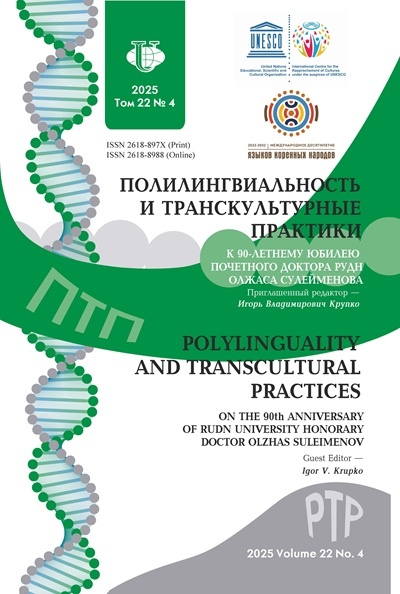
- Выпуск: Том 22, № 4 (2025): К 90-ЛЕТНЕМУ ЮБИЛЕЮ ПОЧЕТНОГО ДОКТОРА РУДН ОЛЖАСА СУЛЕЙМЕНОВА
- Страницы: 752-768
- Раздел: ОЛЖАС СУЛЕЙМЕНОВ: ЗНАК ИНТЕГРАЛА
- URL: https://journals.rudn.ru/polylinguality/article/view/48255
- DOI: https://doi.org/10.22363/2618-897X-2025-22-4-752-768
- EDN: https://elibrary.ru/EVVCZS
- ID: 48255
Цитировать
Полный текст

Аннотация
Исследована история книги Олжаса Сулейменова «Аз и Я» в 1975-1976 гг. Идеологическая дискуссия вокруг этой книги оказалась одной из самых резонансных в ХХ в., а ее историософия определила на десятилетия вперед формирование в Казахстане исторических нарративов преодоления культурной травмы «внеисторичности» и обретения исторической субъектности посткочевой культуры казахов, повлияв не только на общественное сознание, но и на аксиологию академического нарратива. Цель и задачи исследования - изучение социокультурной природы и идеологических противоречий дискуссии, вызванной книгой «Аз и Я» на материалах архивных и нарративных источников, а также мемуаров автора и его современников. Исходя из обвинений, предъявленных Олжасу Сулейменову (в пантюркизме, сионизме и скептицизме), и анализируя их в таких документах, как «Записка в Госкомиздат», письма высшего партийного руководства СССР, материалы обсуждения книги в Академии наук СССР, критические рецензии и сам ход дискуссии, мы пришли к выводу о том, что «Аз и Я», во-первых, обнажила социокультурную природу идеологического сознания советского общества, а во-вторых, наглядно продемонстрировала идеологические противоречия между двумя длящимися периодами в истории СССР: постсталинизма и оттепели. Идеологическое руководство страны, с одной стороны, стимулировало рост этнонационального самосознания, а с другой - блокировало проявления субъектности, выходящей за дозволенные пределы предписанного статуса «младшего брата», и пресекало попытки осмысления драматических страниц истории такого родства. Материалы таких идеологических дискуссий позволяют исследовать, как советская иерархия культур в казахстанском случае сформировала субъектность преодолевающую травмы постномадизма в диалоге с мировой культурой.
Об авторах
Игорь Владимирович Крупко
Международный Центр сближения культур под эгидой ЮНЕСКО
Автор, ответственный за переписку.
Email: tengri95hismatulin@mail.ru
ORCID iD: 0000-0002-5349-0256
доктор философии в области истории, заместитель директора
Республика Казахстан, 050010, г. Алматы, ул. Кунаева, д. 120Список литературы
- Абылхожин Ж.Б., Крупко И.В. Идеологические дискуссии и поиск исторической субъектности казахстанского общества в ХХ веке // Новые исследования Тувы. 2024. № 3. С. 265–278. https://doi.org/10.25178/nit.2024.3.15 EDN: IUVNNU
- Крупко И.В. Переизобретение исторической субъектности казахов в творчестве Олжаса Сулейменова 1960-х гг. // Уральский исторический вестник. 2023. № 1 (78). С. 123−132. https://doi.org/10.30759/1728-9718-2023-1(78)-123-132 EDN: KYFNAO
- Тлостанова М. Главной его мишенью был европоцентризм // Олжас и Я. Книга вторая. Москва : Художественная литература, 2018. С. 415–436.
- Должиков В.А. Евразийский интегральный тюркославизм О. Сулейменова // Материалы Первого Международного алтаистического форума «Тюрко-монгольский мир большого Алтая: историко-культурное наследие и современность». 2019. С. 70. EDN: EABRFU
- Лихоманов И.В., Бойко В.А. «Аз и Я» Олжаса Сулейменова в контексте евразийского дискурса // Вестник Томского государственного университета. 2020. № 454. С. 137–144. https://doi.org/10.17223/15617793/454/16 EDN: GADFTD
- Ram H. Imagining Eurasia: The Poetics and Ideology of Olzhas Suleimenov’s AZ i IA // Slavic Review. 2001. Vol. 60. No. 2 (Summer). P. 289–311. URL: http://www.jstor.org/stable/2697272 https://doi.org/10.2307/2697272 EDN: HACQYP
- Джусупов М. «Аз и Я» Олжаса Сулейменова (ген неповиновения и ген справедливости) // Ўзбекистонда хорижий тиллар. 2020. № 1 (30). С. 219–236. https://doi.org/10.36078/1586145534 EDN: ZLDBWH
- Мельников Д. К пост- / деколониальному воображению: Художественная рефлексия пространства и языка в постсоветской русскоязычной литературе Казахстана // Qazaqstan. Казахстан, قازاقستان: лабиринты современного постколониального дискурса / А.Ж. Бисенова и др. Центр современной культуры «Целинный». Алматы, 2023. C.120–122
- Caffee N. Between First, Second, and Third Worlds: Olzhas Suleimenov and Soviet Postcolonialism, 1961–1973 // Russian Literature. 2020. Vol. 111. P. 91–118. https://doi.org/10.1016/j.ruslit.2020.03.004 EDN: FQMIHG
- Абылхожин Ж.Б. Постсталинский период в истории советского Казахстана: череда обреченных реформ и несостоявшихся деклараций (1953–1991 гг.). Алматы : КБТУ, 2020.
- Маничкин Н. Взаимозависимое становление: поэтическая реинтерпретация символов и образов исторической памяти в Казахстане // Asian Journal “Steppe Panorama”. Вып. 10. № 2. С. 334–346. https://doi.org/10.51943/2710-3994_2023_34_2_334-346
- Преображенский С.Ю. О воображаемой филологии О.О. Сулейменова // Полилингвиальность и транскультурные практики. 2018. Т. 15. № 3. С. 406–409. https://doi.org/10.22363/2618-897X-2018-15-3-406-409 EDN: YLXEZV
Дополнительные файлы

