







 Email this article
‘Falling Backward’, or How Crises Affect Integration: The EU and the Energy Crisis
- Authors: Baykov A.A.1, Crowley-Vigneau A.S.1, Kalyuzhnova Y.2
-
Affiliations:
- MGIMO University
- Henley Business School
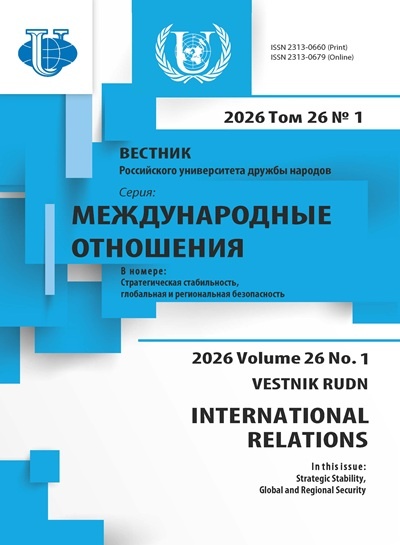
- Issue: Vol 26, No 1 (2026): Strategic Stability, Global and Regional Security
- Pages: 108-125
- Section: REGIONAL ASPECTS OF INTERNATIONAL RELATIONS
- URL: https://journals.rudn.ru/international-relations/article/view/49509
- DOI: https://doi.org/10.22363/2313-0660-2026-26-1-108-125
- EDN: https://elibrary.ru/SWEVWT
- ID: 49509
Cite item

Abstract
This paper investigates the applicability of the concept of ‘falling forward’ to crisis management in the European Union. An idea central to the literature is that the EU draws upon crisis situations to enhance its power and influence, as member states are willing to delegate further competencies to EU organs in order to collectively solve pressing problems. The assumption that crisis situations lead to an increase in the power of the supranational entity has been the subject of multiple studies, yet, the long-term impact of this process, which takes place with minimal public accountability, has been largely neglected. We seek to go beyond the short-term effects of crises on integration, to determine how shock events impact integration structures in the long run. A mixed methods inquiry, based on 102 survey responses and 15 interviews with EU experts, triangulated with Eurobarometer results, reveals that accelerated integration can foster dissatisfaction, bringing about a surge in elections of extremist and Eurosceptic parties. These political changes could pose a significant threat to EU integration and may cause the union to ‘fall backward’ rather than ‘forward’, as is systematically predicted in the existing academic literature. The case-study of the 2022 energy crisis in the EU confirms that the regional organisation does indeed gain in power and influence as it works to manage and mitigate the repercussions of a crisis but that this strengthening gives rise to new challenges for the union. This paper yields novel theoretical insights into the spill-over process (including the original concept of ‘falling backward’) and the functioning of regional organisations as complex polities.
Full Text
Introduction
Jean Monnet noted: “I have always believed that Europe would be built through crises, and that it would be the sum of their solutions” (Monnet, 1978, p. 417). This comment was based on the observation that the organisation was evolving towards greater cooperation not in spite of constant trials and disagreements, but owing to them.
Since then, the literature has substantiated the idea that the European Union (EU) draws upon crisis situations to increase its power and influence, as member states are ready to delegate further competencies to EU organs in order to collectively solve pressing problems. This process has been described as a ‘spill-over,’ or ‘falling forward,’ terms that underline the supposed unintentional nature of this process. The premise behind it is that states are unwilling in times of welfare and security to renounce any further pans of their decision-making authority to the supranational organisation, but acute problems bring them together.
In this paper, we examine the relevance of this conceptualisation today and focus on the short- and long-term impact on European integration of the energy crisis resulting from the 2022 Ukraine crisis and the Western sanctions against Russia that ensued. The goal is to determine whether crisis situations always make the EU ‘fall forward’ and, more importantly, whether there is a price to pay in terms of public opinion and internal cooperation dynamics between member states for rapid crisis-led integration. Our data collection is based on a survey of 102 specifically-selected specialists in EU integration and fifteen expert interviews which evaluate public perceptions of how the EU has managed the energy crisis by weaning its members off Russian fossil fuels, pushing the roll-out of renewables and upping its imports of LNG from ‘friendly’ countries. Gauging the state of the public’s and expert opinions after a phase of strong EU-led changes, ambitiously pushed by the Commission, helps to determine whether there are any risks to the regional organisation itself. In effect, public opinion impacts the development of the EU and yet the deepening of integration often takes place in times of crisis without public approval, which foments anti-EU sentiment.
The findings show that experts believe that public perceptions influence the evolution of the EU and that there is significant dissatisfaction with current policymaking at the level of the EU which impacts popular perceptions both of EU institutions and of national governments. The energy poverty and hardships experienced by the population, coupled with a rise in the elections of extremist Eurosceptic parties, indicate that while the spill-over process seems to be successful, with the EU Commission enthusiastically embracing new responsibilities, some backlash against the EU is occurring. The EU, while it appears to once again be ‘falling forward,’ may in fact ‘fall backward’ as a result of a perceived democratic deficit.
Overview of Crisis and EU Integration
Various perspectives on integration have appeared in the literature to account for the European project: neo-functionalism focuses on economic interdependence as a driver of regional integration, with the theorisation of functional and political spill-overs (Haas, 1958; Ruggie et al., 2005). Intergovernmentalists describe integration as a process whereby states pool their sovereignty in order to promote their national interests. Liberal intergovernmentalists emphasise the role of bargaining between national governments and attribute little importance to supranational organs. Institutionalism considers how rational choice, social norms and historical path dependency impact integration mechanisms. Proponents of Multi-Level Governance describe how authority has moved not only from nation-states to regional institutions but also to various sub-national and global levels (Hooghe & Marks, 2001).
A significant section of the current scholarship continues to discuss how developing supranational institutions in different policy areas can lead to a reinforcement of supranational commitments with an emphasis on cultural spill-overs that result from the desire of supranational institutions to increase their power and increase the number of issues subject to joint governance (Frischmann & Lemley, 2007). This idea that the EU is constantly changing through spill-over processes is shared by EU policymakers and leaders who frequently refer to projects as ongoing and unfinished, including the single currency, the fiscal union, environmental policy, the political and monetary union, etc. (van Meurs et al., 2018). The process of Eastern enlargement is also incomplete, with the EU continuing to spill over its own borders and to redefine its identity through a logic of ‘problem making-problem solving’ which involves creating its own challenges to solve (Anghel & Jones, 2022; Rabinovych, 2025). The spill-over was largely enabled by the ‘permissive consensus’, according to which the political mainstream agreed on the desirability of further integration and citizens allowed their representatives to pursue it (Lindberg & Scheingold, 1970). However, growing controversy with both deepening and enlargement trends have given way to a ‘constraining dissensus’ and to the politization of the EU (Hooghe & Marks, 2009). The nature of the spill-over itself has evolved from advances in regulatory policy, viewed as largely technical, to the implementation of highly politicised redistributive policies such as the European Financial Stability Facility or the European Stability Mechanism.
In spite of new contestation mechanisms and the hike in politization of EU policy-making, roll-back mechanisms in integration are largely neglected in the literature, with only a few exceptions. Redistributive conflicts related to core state powers (police, border control, public revenue, etc.) are presented as zero-sum games in which compliance costs fall upon states rather than private actors and entail increased financial pressure that in turn undermines confidence in the union (Genschel & Jachtenfuchs, 2018). The energy crisis in the EU is currently characterised by an imbalance between demand and supply, leading to an increase in energy prices for households and businesses, challenges in phasing out fossil fuels and controversy surrounding policy responses to these difficulties.
Although this paper focuses on the energy crisis, an analysis of previous crises (further developed in Appendix 1[1]) reveals how the increase in the power of the Commission in times of turmoil can have a damaging effect on public perceptions of the EU. The expert literature has shown causal relations between the management of the migration crisis and Brexit, which should not be portrayed as a separate crisis, but rather as an indirect consequence of the controversies that resulted from the refugee distribution scandals and the rapid empowerment of the EU that ensued (Scipioni, 2018).
Context of the Case Study on EU Integration and the Energy Crisis
Methodology
The research in this paper is based on a mixed-methods data collection process, including an original survey of 102 experts from the EU and fifteen expert interviews.
The goal of the study is to determine, based on perceptions of current and past events, how crisis events affect integration structures. The survey consists of eight questions (see the Findings section). The survey was conducted in April and May 2024 with experts on both EU integration topics and energy issues from various spheres: academia (23 respondents), the media (23 respondents), the energy industry (25 respondents), EU institutions (13 respondents) and local and national governments (18). The respondents were all EU nationals and were selected based on fulfilling at least one of the following criteria:
- no less than 5 academic articles published in Q1 journals (Scopus ranking) over the past five years (2020 to 2024) on European integration,
- no less than 15 articles published on the EU’s energy policy in 2023 in national newspapers,
- a permanent position in an EU-based energy company,
- a permanent political or administrative position in any main EU organ (Parliament, Commission, Council),
- an elected and administrative position in a local, national government or energy-related governmental agency.
An anonymised list of survey respondents is available in Appendix 2.2
The survey results yielded significant insights regarding the influence of the energy crisis on EU integration. In order to further explore the reasons why experts believed the energy crisis could lead to backlash against the EU, the authors conducted in August 2024, 15 semi-structured interviews with experts from this same database. The interview sample included 4 journalists, 3 academics, 4 from the energy business, 3 from EU organs and 1 government representative. The anonymised list of interviews is available in Appendix 3.2 Additional methodological information is provided in Appendix 4.[2]
Context
There was a historical energy dependency between the EU and Russia, with the former relying on the import of Russian oil and gas, and the latter on the financial inflow from energy exports to the EU which constituted up to a quarter of the country’s national budget over the 2010s (Dickel et al., 2014). However, relations between the EU and Russia underwent a rapid deterioration in the 2000s (Crowley-Vigneau, Baykov & Kalyuzhnova, 2025). The EU’s attempts as a norm maker to shape the geopolitical space around it and stigmatise its opponents grew over this period (Mazanik & Romanova, 2024). As political tensions developed between the two sides, particularly in 2014 in the wake of the Crimea crisis, an attempt at diversification was made, with the EU placing a new emphasis on renewable power generation and liquefied natural gas (LNG) imports from the US and Russia seeking out new trade partners.
The 2022 hostilities in Ukraine and the resulting Western sanctions on Russia widened yet further the political rift between the EU and Russia. Borovsky (2025) demonstrates that since 2022 Western energy sanctions and Russian countermeasures have become both open and extreme, spelling out the lowest point in their energy relations. The desire for energy independence became the first priority in the EU’s policy agenda (Borovsky & Shishkina, 2022), even though Western countries’ attempt to cut Russia off from any income from oil and gas exports have sometimes challenged the EU’s own energy security. The energy poverty experienced by EU citizens and the impact sanctions had on the slowdown in economic development in EU countries has so far not been thoroughly investigated (Hussain et al., 2023). However existing figures suggest high levels of energy poverty in some EU countries and a significant discrepancy between member-states.[3]
Energy poverty has been defined as ‘a household’s lack of access to essential energy services, such as heating, hot water, cooling, lighting and energy to power appliances which results from high levels of energy spending in proportion to income and low energy-performance of buildings.[4] The combination of heightened environmental concerns and the enmity with Russia have forced EU countries, under the unwavering guidance of the EU Commission and its ‘Green Deal,’ to accelerate their transition to renewables (Piskulova, 2022). Studies have however shown that the EU, in spite of official statistics, is not yet close to being weaned off Russian gas, as ‘gas-laundering’ through China, India, Türkiye and Singapore has become a commonplace occurrence: de facto the intermediaries of this transaction are the winning parties[5]. The impact of energy insecurity on popular perceptions in EU countries and the rise of the Commission, already blamed for the EU ‘democratic deficit,’ are widely unexplored.
The ‘securitisation’ of energy (Buzan, Wæver & de Wilde, 1998) has led to tensions with the climate agenda and a reshaping of global and domestic energy politics (Grigoryev & Kheifets, 2022). In this regard, this study aims to understand how the current energy crisis may impact the EU and how the analytical results obtained can be used to understand other crises in the European Union.
Findings
EU Citizens Retain Some Influence on EU Policymaking
In spite of claims in the literature of a ‘technocratic’ Europe, a small majority of respondents (53%) believes that popular perceptions of EU integration still determine political outcomes (Figure 1). EU citizens are represented in the European Parliament, but according to respondents, they have the most influence on the formation of internal European policy. National governments are directly involved in the work of the EU Council and are responsible for nominating candidates for the EU Commission, but are also more widely held accountable for EU decision-making. One respondent from the University of Warsaw (interview 5) noted: “A country’s president or prime minister is what people vote for, it’s what they see. People don’t care what parts of the decision-making process have been delegated to Brussels. Governments are responsible. This means that governments will hold EU representatives responsible.”
The second group of respondents (47%) expressed scepticism as to whether it was really possible for EU citizens to determine political outcomes. A political advisor at Business Europe noted that “The EU is not really accountable to citizens. First, because few understand decision-making processes. Second, because the EU Parliament has limited power to control the Commission. Third, because the Commission members, once they are appointed, are almost impossible to remove” (interview 8). While measures have been taken to educate EU citizens on the ways to get their voice heard in supranational decision-making, the high abstention rate (49% in 2024 elections[6]) suggests that the population does not believe it has a significant influence on policymaking.

Figure 1. Perceptions of EU Integration (share of respondents, %)
Source: compiled by A. A. Baykov and A. Crowley-Vigneau.
Figure 1. Perceptions of EU Integration (share of respondents, %)
Source: compiled by A. A. Baykov and A. Crowley-Vigneau.
The EU took a leadership role in energy decision-making during the 2022–2024 crisis, which led to an increase in power of the EU Commission
When asked about who has the upper hand in dealing with the 2022–2024 energy crisis, 59% of respondents answered ‘the EU,’ 32% ‘the governments of member states’ and 9% ‘EU citizens’ (Figure 2). Article 194 of the Treaty on the Functioning of the European Union states that energy is a shared responsibility between EU Member States and the EU, with member states deciding the conditions for the extraction of their natural resources, selecting between types of energy and deciding on the structure of their energy supply and the EU controlling the functioning of the energy market, promoting energy security, energy efficiency and promoting renewables.[7] However, the issues dealt with at the EU level have gained in importance, with the green transition away from fossil fuels being strongly promoted from above as noted by a MEP (Group of the Greens, interview 10): “Each electoral cycle leads to changes in national environmental ambitions. […] But governments know there is an EU chief whip above, ready to hold them accountable for the commitments of previous governments.”
Others highlight the way the Commission has taken on the role of a government: “In 2022, the Biden government interacted directly with the Commission to coordinate the transatlantic response to the fighting in Ukraine, propelling Von der Leyen into the limelight,” noted a journalist at a Czech Lidove Noviny (interview 3). “When you look at the scope of the Green Deal, you see the Commission’s success in carving out for itself new spheres of influence,” remarked a lecturer at Comenius University (interview 14).

Figure 2. Beneficiaries of the Energy Crisis (share of respondents, %)
Source: compiled by A. A. Baykov and A. Crowley-Vigneau.
Figure 2. Beneficiaries of the Energy Crisis (share of respondents, %)
Source: compiled by A. A. Baykov and A. Crowley-Vigneau.
When asked more specifically whether the energy crisis had led to more authority being delegated to the EU Commission (Figure 3), 52% responded affirmatively, 32% negatively and 16% were unsure. This question reveals not only that decision-making during the energy crisis moved from states to the EU but also from the Council and the European Parliament to the Commission. Respondents underline the role played by the Commission in the EU system: “Although the Council obviously makes most of the decisions, the Commission assumes a critical role as it both writes up the resolutions which are presented to the Council and is responsible for their implementation” (journalist, Green European Journal, interview 7). Others underline the increasing role of the Commission in difficult times: “The more acute the crisis, the greater the role of the Commission, because there is no time to put things through Parliament” (journalist, Euronews, interview 15).
There is an overwhelming perception among respondents that the primary actor in energy decision-making during the 2022–2024 crisis has been the EU rather than member states or EU citizens. Findings also show that the EU Commission has indeed gained in influence and power from the energy crisis.

Figure 3. Increase in Authority of the Commission (share of respondents, %)
Source: compiled by A. A. Baykov and A. Crowley-Vigneau.
The management of the EU energy crisis is perceived as dissatisfactory
When asked how well the EU has managed recent energy challenges, 61% of respondents expressed dissatisfaction at the increase in energy poverty, 26% recognised some achievements of the EU considering the difficult circumstances by noting the steps taken were satisfactory, while 14% thought the EU had done overall a good job at protecting the population against energy shortages (Figure 4). The answers present a wide diversity of national perspectives. An analyst at the Danish Energy Agency (interview 11) questioned the dominant stance in the Western media that the EU had staved off shortages: “We keep being told wide and loud that we dodged a bullet, that we have made it through the crisis unharmed but say that to the now 10% of EU citizens who are living in energy poverty.”
The EU Commission’s ambitious goals presented in the Green Deal are also considered with scepticism by a number of respondents: “Von der Leyen has outgrown her shoes, she’s the white knight promoting liberal democracy, the promoter of energy sovereignty and the militant for global decarbonisation … but she’s forgotten who she answers to … the people, who don’t care for geopolitics and can’t pay their bills” (Media Relations Manager, Danish Total, interview 6). Those supporting the EU’s policy mostly state political reasons: “It was our duty to support our ally by depleting Russian resources, even at a significant cost to us” (analyst, EU Commission, interview 13) and “Energy independence in the current context is a worthwhile endeavour!” (ENI, marketing manager, interview 2).

Figure 4. Energy Challenges after 2022 Ukraine Crisis (share of respondents, %)
Source: compiled by A. A. Baykov and A. Crowley-Vigneau.
Discontent is on the rise, both with the EU and with the governments of member states
Alongside the experts’ own assessment of the efficiency of EU policymaking, the survey enquired into their perception of popular opinion surrounding the EU’s and national governments’ role in policymaking in the wake of the energy crisis. When asked whether the energy crisis had led to more discontent with the EU and to an increase in nationalism in member states, 61% of respondents answered ‘yes,’ 23% — ‘no’ and 17% were uncertain (Figure 5). The findings suggest that the energy crisis has reduced the general ‘popularity’ of the EU and has been a catalyst for an increase in nationalist sentiments.
A 2022 Eurobarometer survey reveals on the other hand that 49% of EU citizens believe that the EU’s energy policy will have a positive impact.[8] This suggests a polarisation in the EU between supporters and detractors of the current energy policy line, rather than an overall rejection. The lecturer at Comenius University (interview 14) noted: “The expression of complete discontent with the EU remains in my view a minority phenomenon but it doesn’t mean it can’t grow and tip the balance or the people can’t be manipulated into rejecting the EU. Just look what happened with the UK. No one thought Brexit was possible, until it happened.”
The EU is not the only source of popular discontent as national governments are also being held responsible by the population for some of the repercussions of the 2022 energy crisis according to respondents. Some 51% believe national governments are always held responsible for energy policy, 37% that the EU is the most likely scapegoat in public perceptions, while 12% were uncertain (Figure 6). There is no contradiction between the answers to the two previous questions; however, the results indicate that dissatisfaction with the management of the energy crisis spans across several levels of government in public perceptions, as summarised by the following comment: “When you are not sure who to blame, the safe option is to blame everyone” (analyst, EU Commission, interview 13). While the EU defined the policy goals, implementation is in fact a national task as illustrated by the following comment: “Governments may be seen as not having made sufficient efforts to cushion the underprivileged from the effects of inflation and the rise in energy prices” (EU Member of Parliament, Group of the Greens, interview 10).

Figure 5. Post-Crisis Discontent with the EU (share of respondents, %)
Source: compiled by A. A. Baykov and A. Crowley-Vigneau.

Figure 6. Post-Crisis Discontent with Member States (share of respondents, %)
Source: compiled by A. A. Baykov and A. Crowley-Vigneau.
The EU is likely to face popular backlash resulting from the additional power it took to manage the energy crisis
The final question of the survey discovered that 63% of participants believe the EU will experience a roll-back of the power it acquired during the energy crisis, 21% think the spill-over is long-lasting, while 17% are undecided on the issue (Figure 7). Respondents deal directly with the issue of the spill-over, the idea that historically the EU has gained power during crisis times and typically not returned it after the crisis ended. The following comment suggests that the EU has faced backlash over the rapid delegation of state power to the EU, particularly the Commission, during crisis times: ‘External crises like the energy crisis resulting from geopolitical tensions in Europe lead to internal ones within the EU, with a delay ranging from several years to several decades. Brexit is a direct consequence of how the 2015 migration crisis was managed by the EU’ (Professor, Sciences Po University, interview 4).
It should be noted that the typical pattern of EU evolution is not the Commission acquiring power and then having to give it back but rather that the rapid growth in influence of EU organs leads to unpredictable tensions fuelled by public resentment: “One part of the EU takes and usually another has to give back. The bailing out of Greece during the 2008 financial crisis created a political rift between northern and southern Europe which subsists to this day, with resentment on both sides” (political advisor, Business Europe, interview 8).
This backlash trend could also apply to the current energy crisis. As the Commission increases its influence, dissatisfaction among the people empowers Eurosceptic parties which have for declared goal to secede from the union. As noted by the marketing manager at ENI (interview 2): “As extreme parties start to be voted into national parliaments in EU countries, the very question of EU membership is being discussed more frequently.” Another respondent noted that the sovereigntist political group ‘Patriots for Europe’ who believe that the EU should be restricted to intergovernmental cooperation is rapidly gaining ground in the EU Parliament: “This anti-EU group became in July the third largest group in the EU Parliament and the biggest far-right group to ever form in the EU Parliament. All the other parties get together to stop it from exercising political power in a similar way to what happens in French politics, but this is clearly a time-bomb. Anger increases against EU governance as millions of voters find their deputies ostracised” (Professor, Sciences Po University, interview 4).

Figure 7. Assessment of Potential Backlash (share of respondents, %)
Source: compiled by A. A. Byakov and A. Crowley-Vigneau.
Discussion
The results suggest that public opinion has an impact on the development of the EU and yet the deepening of integration often takes place in times of crisis and without public approval, which in turn stimulates anti-EU sentiment. The Commission’s recent trend of enhancing its influence as a norm-maker by generating technical but highly-politicised solutions to questions raised by the Council of Ministers, the EU Parliament and even foreign governments has increased its international standing. The energy crisis in the EU is a multifaceted challenge that results from several decisions made by national governments that the Commission turned into a ‘common package’: the first is the decision to transition to green energy, the second to suddenly stop importing fossil fuels from Russia and the third to promote energy independence in the EU.
The Commission, although it frequently presents itself as the solution to the energy crisis, is also at the origin of the crisis, as these triple ambitions and the tight deadlines associated with them, have put EU countries in a precarious situation with energy poverty spiking in the least wealthy countries (Bulgaria, Greece). Although some EU countries value their role in the Russia—Ukraine conflict and strongly back sanctions against Russia, the support is not uniform (Petrović & Bilić, 2025). Likewise, some countries are more committed than others to decarbonisation or energy independence. Belonging to the EU has encouraged or even constrained in some cases member states to align with the most ambitious agenda and to embrace everyone’s priorities. This is considered one of the best features of the EU, however it also leads countries to overextend themselves, potentially making them vulnerable to heightened social and economic problems.
While Greece is ambitious in its renewables agenda and aspires to achieving energy sovereignty, polls show it is less concerned about shaping the EU response to the Ukraine conflict than other EU countries (Amadio Viceré & Sus, 2025) and sections of Greek society retains pro-Russian views (Manoli, 2024). The governmental decision to stop importing Russian gas appears at odds with popular sentiments and has been an aggravating factor for energy poverty in the country. Reversely, Poland is reluctant to shut down its coal mines and has seen in 2024 several violent protests by farmers against EU climate policies, but is overall very favourable to the sanctions imposed on Russia in the energy sphere. Even countries such as France, which vocally support all points of the Commission’s Green Deal, find themselves overstretched, as reflected by the rise in the extreme right. In a Eurobarometer poll on EU energy policy conducted in April-May 2024, citizens, when asked what EU energy actions should focus on in the next 5 years, selected as their first response ‘help consumers to access more affordable energy prices’ above other choices such as ‘increasing EU energy independence’ and ‘advancing climate neutrality.’[9]
Perceptions of the EU’s energy strategy at state level are also conditioned by differing national energy policies. Member states make their own choices regarding their energy sources and the general structure of energy supply, while trying to stay in line with EU targets on the percentage of renewables. National choices, such as nuclear reliance in France, the dependence on coal in Poland or Germany’s reliance on imported gas, all impact how citizens feel about the EU’s energy policy. A country’s technological advancement also determines the ease with which it can transition to renewables. Infrastructure readiness to roll out smart-ready services is a decisive factor in promoting energy efficiency. EU energy cohesion requires overcoming large gaps between countries. Additionally, the sharing of competences between the EU and member states on energy matters is not universally understood and ineffective energy choices by national governments also impact the perception of the work of the EU, and by extension, the union’s potential for ‘falling back’.
The use by scholars of the terms ‘spill-over’ or ‘falling forward,’ implies that the increase in the influence of the EU is of an unintentional nature and that it happens in an uncontrolled manner. When considering the role and ambitions of the EU Commission, this increase of the EU’s authority in matters that are legally part of a mixed regime or of the competence of member states does not appear random but planned. A crisis undoubtably offers the EU an opportunity for policymaking, but it is the Commission that invariably seizes it and expands its power. When considering other regional organisations, crises rarely result in a deepening of integration. In the EU, in times of crises, cooperation deepens because the level of integration is such that member states are subject to the ‘locked-in syndrome’ according to which it is more difficult to leave the union or to resist collective pressure than to give in to supranational decision-making. Although this may suggest that the union is likely to get stronger henceforth, we argue for several reasons that a significant backlash is in preparation as a result of this spill-over which empowers a Commission which is widely described as suffering from a democratic deficit.
First, the effects of Brexit on the EU are far-reaching as it is the first incidence of secession. Countries have come to realise that leaving the union is feasible with little apparent damage. Second, the image of the EU Commission has evolved from technocratic to political and this change requires it to increase its public accountability, a task with which it struggles. Indeed, while Börzel and Risse believe politization is an opportunity for the EU to reform its institutions; little has yet been done in this regard (Börzel & Risse 2018). Support is also dwindling for the prioritisation of political and environmental goals by the EU over quality-of-life issues.
Although poverty reduction and sustainable development are framed as joint goals by the Commission, with the premise that green energy could make societies more equitable (Delafield et al., 2021), studies on energy poverty have shown that entry barriers to renewables infrastructure access lead to an increase in the relative poverty of ethnic minority and low-income households (Keady et al., 2021). The theoretical coupling of social justice and the development of renewables, sometimes referred to as a ‘just transition,’ meets real challenges in practice, with these different policy priorities being difficult to jointly implement. The high costs associated with rolling out the energy transition represent an aggravating factor for energy poverty, particularly in Southern and Eastern EU states which present more vulnerabilities than central and northern states, including lower income, higher income inequality, poor energy efficiency, dwelling quality issues (Ben Cheikh, Ben Zaied & Nguyen, 2023).
The energy crisis represents a turning point beyond which the EU, if it does not continue to ‘fall forward’, may start to ‘fall backward.’ This unravelling may take place at an EU institutional level, with changes at the level of the EU Parliament or at the EU Council, leading to a systematic blocking of the Commission’s decisions. The regression could take the shape of a rejection of the EU at street level with serious disruptive demonstrations compromising the functioning of some member states. The EU could also fall backward with the departure of one or several more countries from the EU following the accession to power of a Eurosceptic party in national politics. The timeframe for the roll-back is contingent on a number of factors including the measures that sitting governments take to block nationalist movements, the inflation rate and the stability/disruptions in the energy supply.
Eurosceptic, extremist and populist parties can also undermine the work of the European Parliament through specific voting patterns and present, as their influence accrues, an existential threat to integration processes. While not all forms of populism present a threat to an established democratic process and can even in some cases assist the elite in achieving its foreign policy goals (Avatkov, 2021), right-wing forms of populism that promote a Manichean outlook on society present a significant threat at the EU level (Erhardt & Filsinger, 2025). Our study corroborates and extends previous findings that Eurosceptic contestation is increasingly putting European party systems under strain, with challenger parties harnessing voter disenchantment and disrupting the existing order by voting against the Europhile majority in the EU Parliament (de Vries & Hobolt, 2020). The structure of political conflict and voting in the EU Parliament (where Eurosceptic parties currently occupy over a third of seats) has shifted towards an increasingly dominant pro-/anti-EU divide: the public appeal of Eurosceptic discourse has led pro-European MEPs to discursive accommodation of Eurosceptic concerns, thus gradually shifting the policy agenda away from further integration (Wunsch & Bélanger, 2024). Our findings also show that the policy gap between the Commission and the Parliament is growing, with the former pursuing integration with limited accountability to the former.
Conclusion
Using a mixed-methods research design, the authors investigated the widely-shared belief that EU integration expands in times of crisis through a mechanism of constantly ‘falling forward’. The case-study of the 2022 energy crisis in the EU reveals that the regional organisation does indeed gain in power and influence as it works to manage and mitigate the repercussions of a crisis. However, this strengthening carries risks that can bring about new challenges and even threaten the perennity and integrity of the organisation. The paper brings to light some new dimensions of the spill-over effect by considering its effect on public perceptions of the EU. Accelerated integration, characterised by a hike in the influence of the Commission, is shown to foster dissatisfaction resulting in a surge in elections of extremist and Eurosceptic parties. These pose a significant threat to the EU and could cause it to ‘fall backward’ rather than ‘forward’ if measures are not taken to increase accountability and strengthen the EU structure. Policy recommendations to reinforce the regional organisation in the face of these challenges are presented in Appendix 5.[10]
1 Baykov A. A., Crowley-Vigneau A., Kalyuzhnova Y. ‘Falling Backward’, or How Crises Affects Integration: The EU and the Energy Crisis — Expert Interview Database // MGIMO Repository. URL: https://open.mgimo.ru/handle/123456789/8593 (accessed: 12.03.2026).
2 Baykov A. A., Crowley-Vigneau A., Kalyuzhnova Y. ‘Falling Backward’, or How Crises Affects Integration: The EU and the Energy Crisis — Expert Interview Database // MGIMO Repository. URL: https://open.mgimo.ru/handle/123456789/8593 (accessed: 12.03.2026).
3 According to data from the European Commission Research Center (2024), in Greece and Bulgaria, nearly 30% of the population is energy poor, while in Western and Northern EU countries, this figure is under 5%. See: Who’s Energy Poor in the EU? It’s More Complex Than It Seems // European Commission Research Center. September 25, 2024. URL: https://joint-research-centre.ec.europa.eu/jrc-news-and-updates/whos-energy-poor-eu-its-more-complex-it-seems-2024-09-25_en (accessed: 15.06.2024).
4 Who’s Energy Poor in the EU? It’s More Complex Than It Seems // European Commission Research Center. September 25, 2024. URL: https://joint-research-centre.ec.europa.eu/jrc-news-and-updates/whos-energy-poor-eu-its-more-complex-it-seems-2024-09-25_en (accessed: 15.06.2024).
5 Rosen P. China and India ‘Launder’ Russian Oil and Resell It to Western Nations That Sanctioned Moscow, Study Says // Business Insider. April 19, 2023. URL: https://markets.businessinsider.com/news/commodities/russian-oil-laundered-china-india-moscow-sanctions-europe-west-ukraine-2023-4 (accessed: 10.02.2025).
6 European Elections 2024: Election Results // European Parliament. URL: https://results.elections.europa.eu/en/turnout/ (accessed: 10.02.2025).
7 Consolidated Version of the Treaty on the Functioning of the European Union // Official Journal of the European Union. October 26, 2012. URL: https://eur-lex.europa.eu/LexUriServ/LexUriServ.do?uri=CELEX:12012E/TXT:en:PDF (accessed: 10.02.2025).
8 Europe’s Response to the Energy Challenges // European Union. December 2022. URL: https://europa.eu/eurobarometer/surveys/detail/2912 (accessed: 12.06.2025).
9 Special Eurobarometer 555: Europeans’ Attitudes towards EU Energy Policy // European Commission. April-May 2024. P. 69. URL: https://europa.eu/eurobarometer/api/deliverable/download/file?deliverableId=93914 (accessed: 12.06.2025).
10 Baykov A. A., Crowley-Vigneau A., Kalyuzhnova Y. ‘Falling Backward’, or How Crises Affects Integration: The EU and the Energy Crisis — Expert Interview Database // MGIMO Repository. URL: https://open.mgimo.ru/handle/123456789/8593 (accessed: 12.03.2026).
About the authors
Andrey A. Baykov
MGIMO University
Author for correspondence.
Email: baykovaa@yandex.ru
ORCID iD: 0000-0003-0432-4603
SPIN-code: 8049-2071
PhD (Political Science), Professor, Department of Applied International Analysis
76 Vernadsky Avenue, 119454, Moscow, Russian FederationAnne Sofi Luiz Crowley-Vigneau
MGIMO University
Email: vigneau.a@my.mgimo.ru
ORCID iD: 0000-0001-7466-2451
SPIN-code: 2436-0202
PhD (Political Science), Professor, Department of Applied International Analysis
76 Vernadsky Avenue, 119454, Moscow, Russian FederationYelena Kalyuzhnova
Henley Business School
Email: y.kalyuzhnova@henley.ac.uk
ORCID iD: 0000-0002-5781-8837
PhD (Economics), Professor
Whiteknights, Reading RG6 6UD, United KingdomReferences
- Amadio Viceré, M. G., & Sus, M. (2025). Organizing European security through informal groups: Insights from the European Union’s response to the Russian war in Ukraine. International Politics, 62(5), 931–946. https://doi.org/10.1057/s41311-024-00657-7; EDN: AANOEG
- Anghel, V., & Jones, E. (2022). Failing forward in Eastern Enlargement: Problem solving through problem making. Journal of European Public Policy, 29(7), 1092–1111. https://doi.org/10.1080/13501763.2021.1927155; EDN: TATYFC
- Avatkov, V. A. (2021). Populism in the foreign policy of the Turkish Republic. Vestnik RUDN. International Relations, 21(3), 543–554. (In Russian). https://doi.org/10.22363/2313-0660-2021-21-3-543-554; EDN: OILCHF
- Ben Cheikh, N., Ben Zaied, Y., & Nguyen, D. K. (2023). Understanding energy poverty drivers in Europe. Energy Policy, 183, 1–11. https://doi.org/10.1016/j.enpol.2023.113818; EDN: VDWQSM
- Borovsky, Yu. V. (2025). Politicization of global energy supply: Historical and contemporary context. Vestnik RUDN. International Relations, 25(1), 45–55. https://doi.org/10.22363/2313-0660-2025-25-1-45-55; EDN: JFALXT
- Borovsky, Yu. V., & Shishkina, O. V. (2022). The EU’s energy policy and its driving forces. Polis. Political Studies, (3), 67–79. (In Russian). https://doi.org/10.17976/jpps/2022.03.06; EDN: ARYIPL
- Börzel, T. A., & Risse, T. (2018). From the euro to the Schengen crises: European integration theories, politicization, and identity politics. Journal of European Public Policy, 25(1), 83–108. https://doi.org/10.1080/13501763.2017.1310281
- Buzan, B., Wæver, O., & de Wilde, J. (1998). Security: A new framework for analysis. Boulder, CO: Lynne Rienner Publishers.
- Crowley‑Vigneau, A., Baykov, A., & Kalyuzhnova, Y. (2025). Norms as instruments of non-violent rivalry? Russian views on the promotion of renewable energy. International Politics, 62(3), 718–738. https://doi.org/10.1057/s41311-024-00582-9; EDN: UQOSDL
- De Vries, C. E., & Hobolt, S. (2020). Political entrepreneurs: The rise of challenger parties in Europe. Princeton, NJ: Princeton University Press. https://doi.org/10.2307/j.ctvt9k3d3
- Delafield, G., Donnison, C., Roddis, P., Arvanitopoulos, T., Sfyridis, A., & et al. (2021). Conceptual framework for balancing society and nature in net-zero energy transitions. Environmental Science & Policy, 125, 189–201. https://doi.org/10.1016/j.envsci.2021.08.021; EDN: MATVUO
- Dickel, R., Hassanzadeh, E., Henderson, J., Honoré, A., Stern, J., El‑Katiri, L., & et al. (2014). Reducing European dependence on Russian gas — distinguishing natural gas security from geopolitics. Oxford: Oxford Institute for Energy Studies. Retrieved from http://www.oxfordenergy.org/wpcms/wp-content/uploads/2014/10/NG-92.pdf
- Erhardt, J., & Filsinger, M. (2025). A spectre of democracy: Are populist citizens less supportive of democracy? West European Politics, 48(7), 1599–1628. https://doi.org/10.1080/01402382.2024.2398892
- Frischmann, B. M., & Lemley, M. A. (2007). Spillovers. Columbia Law Review, 107(1), 257–301. Retrieved from http://www.jstor.org/stable/40041712
- Genschel, P., & Jachtenfuchs, M. (2018). From market integration to core state powers: The Eurozone crisis, the refugee crisis and integration theory. JCMS: Journal of Common Market Studies, 56(1), 178–196. https://doi.org/10.1111/jcms.12654
- Grigoryev, L. M., & Kheifets, E. A. (2022). Oil markets between Scylla of recovery and Charybdis of climate policy. Russian Journal of Economics, 8(3), 207–233. https://doi.org/10.32609/j.ruje.8.95949; EDN: MXSGVE
- Haas, E. B. (1958). The uniting of Europe: Political, social, and economic forces, 1950–1957. Stanford: Stanford University Press.
- Hooghe, L., & Marks, G. (2001). Multi-level governance and European integration. London: Bloomsbury Academic.
- Hooghe, L., & Marks, G. (2009). A postfunctionalist theory of European integration: From permissive consensus to constraining dissensus. British Journal of Political Science, 39(1), 1–23. https://doi.org/10.1017/S0007123408000409
- Hussain, S. A., Razi, F., Hewage, K., & Sadiq, R. (2023). The perspective of energy poverty and 1st energy crisis of green transition. Energy, 275, 1–9. https://doi.org/10.1016/j.energy.2023.127487; EDN: UYKVMB
- Keady, W., Panikkar, B., Nelson, I. L., & Zia, A. (2021). Energy justice gaps in renewable energy transition policy initiatives in Vermont. Energy Policy, 159, 1–11. https://doi.org/10.1016/j.enpol.2021.112608; EDN: ALOXQY
- Lindberg, L., & Scheingold, S. (1970). Europe’s would-be polity: Patterns of change in the European Community. Englewood Cliffs, NJ: Prentice-Hall.
- Manoli, P. (2024). Greece’s response to Russia’s war on Ukraine. In A. Mihr & C. Pierobon (Eds.), Polarization, shifting borders and liquid governance (pp. 349–365). Cham, Switzerland: Springer. https://doi.org/10.1007/978-3-031-44584-2_21
- Mazanik, S. V., & Romanova, T. A. (2024). Geopolitics of connectivity: The EU in Central Asia. Vestnik RUDN. International Relations, 24(4), 563–575. https://doi.org/10.22363/2313-0660-2024-24-4-563-575; EDN: LUQGDZ
- Monnet, J. (1978). Memoirs. London: Collins.
- Petrović, N., & Bilić, J. (2025). Why history matters? Populist radical right governments in the EU and their foreign policy. The International Spectator, 60(1), 95–115. https://doi.org/10.1080/03932729.2024.2405153
- Piskulova, N. A. (2022). Energy Transition 4.0: Impact on Russia — EU economic relations. Russian Foreign Economic Journal, (1), 27–38. (In Russian). EDN: ULOWGP
- Rabinovych, M. (2025). EU external differentiated integration as a crisis response tool? Evidence from Ukraine. West European Politics, 48(5), 1216–1241. https://doi.org/10.1080/01402382.2024.2401246
- Ruggie, G. J., Katzenstein, P. J., Keohane, R. O., & Schmitter, P. C. (2005). Transformations in world politics: The intellectual contributions of Ernst B. Haas. Annual Review of Political Science, 8, 271–296. https://doi.org/10.1146/annurev.polisci.8.082103.104843
- Scipioni, M. (2018). Failing forward in EU migration policy? EU integration after the 2015 asylum and migration crisis. Journal of European Public Policy, 25(9), 1357–1375. https://doi.org/10.1080/13501763.2017.1325920
- Van Meurs, W., de Bruin, R., van de Grift, L., Hoetink, C., van Leeuwen, K., & Reijnen, C. (2018). The unfinished history of European integration. Amsterdam: Amsterdam University Press. https://doi.org/10.2307/j.ctv8pzc5h
- Wunsch, N., & Bélanger, M.-E. (2024). Radicalisation and discursive accommodation: Responses to rising Euroscepticism in the European Parliament. West European Politics, 47(6), 1223–1250. https://doi.org/10.1080/01402382.2023.2202031
Supplementary files
Источник: составлено А. А. Байковым и А. С. Л. Виньо.

Source: compiled by A. A. Baykov and A. Crowley-Vigneau.
Source: compiled by A. A. Baykov and A. Crowley-Vigneau.
Source: compiled by A. A. Baykov and A. Crowley-Vigneau.
Source: compiled by A. A. Baykov and A. Crowley-Vigneau.
Source: compiled by A. A. Baykov and A. Crowley-Vigneau.
Source: compiled by A. A. Baykov and A. Crowley-Vigneau.
Source: compiled by A. A. Byakov and A. Crowley-Vigneau.

