






Редакционная политика
- Цели и задачи. Тематический охват
- Разделы и направления
- Рецензирование
- Периодичность
- Политика свободного доступа
- Архивация
- Самоархивирование автором
- Индексация
- Этические принципы журнала
- Плата за публикацию
- Политика в области обработки персональных данных
- Авторские права и право на публикацию
Цели и задачи. Тематический охват
Журнал является периодическим рецензируемым научным изданием в области литературоведческих исследований и журналистики.
Цель журнала – научный обмен и сотрудничество между российскими и зарубежными учеными, публикация результатов научных исследований по широкому кругу актуальных проблем литературоведения и журналистики, освещение научной деятельности профессионального сообщества литературоведов и журналистов в России и зарубежных странах.
Приоритетные направления - современная и классическая литература, теория и история журналистики, массовая коммуникация. Принимаются материалы, соответствующие следующим специальностям номенклатуры ВАК: 5.9.1. Русская литература и литературы народов Российской Федерации, 5.9.2. Литературы народов мира, 5.9.3. Теория литературы, 5.9.4. Фольклористика, 5.9.9. Медиакоммуникации и журналистика.
Журнал публикует статьи, доклады и сообщения как известных ученых, так и молодых специалистов, докторантов и аспирантов, а также рецензии, обзоры, информацию о научных проектах.
Материалы публикуются на русском и английском языках, также принимаются к рассмотрению статьи на французском, немецком, испанском языках. В редколлегии журнала работают авторитетные ученые из США, Катара, Нидерландов, Швейцарии, Германии, Испании, Швеции, Индии и Словакии.
Разделы и направления
ОТ РЕДАКЦИИ
СТАТЬИ
Исследовательские статьи по тематическим разделам, приведенным ниже
Литературоведение
История литературы
Современный литературный процесс
Теория и методология литературы
Текстология, фольклористика
Журналистика
История и теория СМИ
Новые медиа
Аксиология журналистики
Реклама и связи с общественностью
Компаративистика
ГЕНЕРАТИВНЫЕ МЕДИА: ТЕОРИЯ, ПРАКТИКА, ВОСПРИЯТИЕ
ИНТЕРВЬЮ НОМЕРА
ОБЗОРЫ
Научные обзорные статьи
РЕЦЕНЗИИ
Рецензии на книги
Хроника
Рецензирование
Все поступившие в редакцию журнала научные статьи проходят обязательное двойное слепое рецензирование (рецензент не получает информации об авторах рукописи, авторы рукописи не получают информации о рецензентах).
- Рецензирование статей осуществляется членами редакционного совета и редакционной коллегии, а так же приглашенными рецензентами – ведущими специалистами в соответствующей отрасли науки из России и других стран. Решение о выборе того или иного рецензента для проведения экспертизы статьи принимает главный редактор, заместитель главного редактора, научный редактор, заведующий редакцией.
- Все привлекаемые рецензенты являются признанными специалистами по тематике рецензируемых материалов и имеют в течение последних 3 лет публикации по тематике рецензируемой статьи.
- Каждый рецензент имеет право отказаться от рецензии в случае наличия явного конфликта интересов, способного отразиться на восприятии и интерпретации материалов рукописи. По итогам рассмотрения рукописи рецензент даёт рекомендации о дальнейшей судьбе статьи (каждое решение рецензента обосновывается):
- статья рекомендуется к публикации в настоящем виде;
- статья рекомендуется к публикации после исправления отмеченных рецензентом недостатков без дополнительного рецензирования;
- статья нуждается в доработке и последующем дополнительном раунде рецензирования;
- статья не может быть опубликована в журнале даже после доработки.
- Срок рецензирования материалов — до 3-х месяцев.
- Редакция журнала не направляет автору текст рецензий. В случае наличия рекомендаций по доработке рукописи, редакция предлагает учесть их при подготовке нового варианта рукописи или аргументировано (частично или полностью) их опровергнуть. Доработка статьи не должна занимать более 2 месяцев с момента отправки электронного сообщения авторам о необходимости внесения изменений. Доработанная автором статья повторно направляется на рецензирование.
- В случае отказа авторов от доработки материалов, им следует в письменной или устной форме уведомить редакцию об отзыве статьи с рассмотрения. Редакция будет вынуждена снять рукопись с рассмотрения, если авторы не предоставят доработанный вариант рукописи в течение 2 месяцев со дня отправки редакцией сообщения о результатах рассмотрения рукописи рецензентами с рекомендациями по доработке. В подобных ситуациях авторам направляется соответствующее уведомление о снятии рукописи с рассмотрения в связи с истечением срока, отведенного на доработку.
- Редакция проводит не более трех раундов рецензирования для каждой рукописи. Если после трехкратной доработки рукописи у большинства рецензентов или у редакции остаются существенные замечания к тексту, рукопись отклоняется и снимается с рассмотрения. В этом случае авторам направляется соответствующее уведомление о снятии рукописи с рассмотрения.
- Если у автора и рецензентов возникли неразрешимые противоречия относительно рукописи, редакция по согласованию с редколлегией и главным редактором может направить рукопись на дополнительное рецензирование. В конфликтных ситуациях решение о публикации рукописи принимает главный редактор на заседании редакционной коллегии.
- Решение об отказе в публикации рукописи принимается на заседании редакционной коллегии в соответствие с рекомендациями рецензентов. Статья, не рекомендованная решением редакционной коллегии к публикации, к повторному рассмотрению не принимается. Сообщение об отказе в публикации и снятии рукописи с рассмотрения направляется автору по электронной почте, в письме приводятся рецензии и основания для отказа в публикации.
- После принятия редколлегией журнала решения о допуске статьи к публикации редакция информирует об этом автора и указывает сроки публикации.
- Наличие положительной рецензии не является достаточным основанием для публикации статьи. Окончательное решение о публикации принимается редакционной коллегией. В конфликтных ситуациях решение принимает главный редактор.
- Авторы в праве оспорить решение редакции об отказе в публикации рукописи и снятии ее с рассмотрения. Для этого следует направить обращение в редакцию, адресовав его главному редактору. В обращении следует подробно изложить причины несогласия авторов с принятым (на основе заключений рецензентов) редакцией решением, привести доводы в пользу пересмотра решения, а также прислать доработанную рукопись (в случае целесообразности такой доработки). Рассмотрение спорных ситуаций и обращений авторов с просьбой о пересмотре решений редакции осуществляет лично главный редактор на заседании редакционной коллегии. Принятые главным редактором решения оспариванию не подлежат.
- Оригиналы рецензий и протоколов рассмотрения рукописей хранятся в редакции журнала бессрочно (не менее 5 лет).
- Рецензии на рукописи (а также переписка авторов с редакцией) в открытом доступе не публикуются и используются только во внутреннем документообороте редакции, а также при общении с авторами. Копии рецензий могут быть переданы в Министерство образования и науки Российской Федерации по запросу.
- Форма рецензии
Периодичность
Журнал выходит в свет четыре раза в год, ежеквартально. Тираж 500 экземпляров. Выходит в бумажном и электронном виде
Политика свободного доступа
Журнал предоставляет непосредственный открытый доступ к своему контенту, исходя из следующего принципа Будапештской инициативы открытого доступа: свободный открытый доступ к результатам исследований способствует увеличению глобального обмена знаниями и прогрессу науки.
Статьи этого журнала доступны всем желающим с момента публикации на сайте в соответствии с открытой лицензией Creative Commons 
Начиная с выпуска № 3 за 2022 год действует лицензия Creative Commons International Public License: Attribution-NonCommercial 4.0 International (CC BY-NC 4.0)  , которая позволяет неограниченно использовать произведения в некоммерческих целях при условии указания авторства.
Вы можете свободно:
- Делиться (обмениваться) — копировать и распространять материал на любом носителе и в любом формате
- Адаптировать (создавать производные материалы) — делать ремиксы, видоизменять, и создавать новое, опираясь на этот материал
Лицензиар не вправе отозвать эти разрешения, пока вы выполняете условия лицензии.
При обязательном соблюдении следующих условий:
- «Attribution» («Атрибуция») — Вы должны обеспечить соответствующее указание авторства, предоставить ссылку на лицензию, и обозначить изменения, если таковые были сделаны. Вы можете это делать любым разумным способом, но не таким, который подразумевал бы, что лицензиар одобряет вас или ваш способ использования произведения.
- «NonCommercial» («Некоммерчески»)— Вы не вправе использовать этот материал в коммерческих целях.
- Без дополнительных ограничений— Вы не вправе применять юридические ограничения или технологические меры, создающие другим юридические препятствия в выполнении чего-либо из того, что разрешено лицензией.
Замечания:
- Вы не обязаны действовать согласно условиям лицензии, если конкретная часть материала находится в общественном достоянии или если такое использование вами материала разрешено согласно применимому исключению или ограничению авторских прав.
- Вам не даётся никаких гарантий. Лицензия может не включать все разрешения, необходимые вам для использования произведения (материала) по вашему замыслу. Например, иные права, такие как право на обнародование, неприкосновенность частной жизни или неимущественные правамогут ограничить вашу возможность использовать данный материал.
К материалам, опубликованным до выпуска № 2 за 2022 г. включительно, применяется лицензия Creative Commons Attribution 4.0 International Public License (CC BY 4.0)
 ,
,
которая позволяет неограниченно использовать произведения при условии указания авторства.
Вы можете свободно:
- Делиться (обмениваться) — копировать и распространять материал на любом носителе и в любом формате
- Адаптировать (создавать производные материалы)— делать ремиксы, видоизменять, и создавать новое, опираясь на этот материал
- в любых целях, включая коммерческие.
- Лицензиар не вправе отозвать эти разрешения, пока вы выполняете условия лицензии.
При обязательном соблюдении следующих условий:
- «Attribution» («Атрибуция») — Вы должны обеспечить указание авторства, предоставить ссылку на лицензию, и обозначить изменения, если таковые были сделаны. Вы можете это делать любым разумным способом, но не таким, который подразумевал бы, что лицензиар одобряет вас или ваш способ использования произведения.
- Без дополнительных ограничений— Вы не вправе применять юридические ограничения или технологические меры, создающие другим юридические препятствия в выполнении чего-либо из того, что разрешено лицензией.
Замечания:
- Вы не обязаны действовать согласно условиям лицензии, если конкретная часть материала находится в общественном достоянии или если такое использование вами материала разрешено согласно применимому исключению или ограничению авторских прав.
- Вам не даётся никаких гарантий. Лицензия может не включать все разрешения, необходимые вам для использования произведения (материала) по вашему замыслу. Например, иные права, такие как право на обнародование, неприкосновенность частной жизни или неимущественные права могут ограничить вашу возможность использовать данный материал.
Источники:
https://creativecommons.org/licenses/by-nc/4.0/
https://creativecommons.org/licenses/by/4.0/deed.ru
https://creativecommons.org/licenses/by/4.0/legalcode
Архивация
Политика сохранения данных
Журнал использует сеть PKP Preservation Network (PKP PN) для электронной архивации всех опубликованных статей. PKP PN является частью инфраструктуры программы резервного копирования данных LOCKSS (Lots of Copies Keep Stuff Safe), обеспечивающей децентрализованное и распределенное хранение, бесперебойный доступ и восстановление подлинной исходной версии контента в случае утраты его издателем.
Полнотекстовый электронный контент журнала хранится в институциональном репозитории РУДН https://repository.rudn.ru/ru/, включенном в проект NORA - Национальный агрегатор открытых репозиториев https://openrepository.ru/ (поиск статей из журналов РУДН по ссылке), и зарегистрирован в Directory of Open Access Repositories - OpenDOAR http://v2.sherpa.ac.uk/id/repository/4669
Информация о всех статьях, опубликованных в журнале, также хранится в Научной электронной библиотеке eLIBRARY.ru. Прямая ссылка архива журнала: http://elibrary.ru/contents.asp?titleid=25713. В НЭБ Вы можете осуществить расширенный поиск по статьям журнала (по ключевым словам, автору, названию, разделу). Ссылка на полный текст статьи указывается на странице статьи в Научной электронной библиотеке eLIBRARY.ru.
Полные тексты статей хранятся на сервере журнала. Доступ к ним осуществляется через данную страницу (http://journals.rudn.ru/literary-criticism/issue/archive).
Печатные экземпляры выпусков журнала передаются на постоянное хранение в Российскую книжную палату - филиал ИТАР-ТАСС, Российскую государственную библиотеку и другие ведущие библиотеки Российской Федерации.
Индексация
Опубликованные в журнале статьи индексируются в международных реферативных и полнотекстовых базах данных:
- Белый список РЦНИ
- Российский индекс научного цитирования (РИНЦ) на базе Научной электронной библиотеки eLibrary.ru (НЭБ)
- DOAJ
- Академия Google (Google Scholar)
- Ulrich's Periodicals Directory
- Dimensions
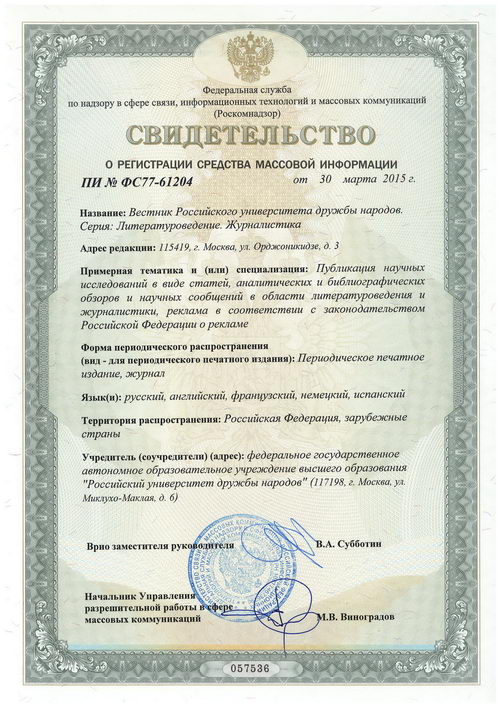
Журнал зарегистрирован в Федеральной службе по надзору в сфере связи, информационных технологий и массовых коммуникаций (Роскомнадзор): Свидетельство о регистрации средства массовой информации ПИ № ФС77-61204 от 30 марта года.
Этические принципы журнала
При отборе (в том числе - рецензировании), подготовке (редактировании) и публикации статей в журнале редакция руководствуется международными нормами публикационной этики.
Редакция считает обязанностью автора и рецензента как можно более оперативно сообщить редакции о пропущенных ошибках и нарушениях, выявленных ими уже после публикации статьи.
Редакция Журнала внимательно и ответственно рассмотрит все обоснованные обращения по поводу обнаруженных нарушений в опубликованных материалах. Обращения с жалобами от авторов, читателей, рецензентов, редакторов или издательств, рассматриваются редакционной коллегией. Обращения должны подаваться в письменной форме. По результатам рассмотрения принимаются решения о исправлении замеченных нарушений, ошибок, неточностей. Информирование заявителей происходит в письменной форме. В случае необходимости редколлегия публикует сведения о неточностях и исправления в одном из номеров журнала.
Издатель журнала - РУДН - является соучредителем и членом Ассоциации научных редакторов и издателей (АНРИ) и поддерживает Декларацию АНРИ "Этические принципы научных публикаций" https://rassep.ru/sovet-po-etike/manifesty/deklaratsiya/

Принципы публикационной этики Журнала основаны на рекомендациях международных комитетов и ассоциаций, в том числе: ICMJE, WAME, COPE, EASE, Council of Science Editors, ORI.
При разработке этих правил издатель и редакция журнала использовали не только свою редакционно-издательскую практику, но и опыт журналов ведущих международных издателей научной литературы.
Этические принципы редакторов Журнала
Редактор обладает исключительным правом принять рукопись к публикации или отклонить ее. Рукопись может быть отклонена редактором на этапе, предшествующем рецензированию, если для этого имеется веская причина (тематика статьи не соответствует тематике журнала; статья очевидно низкого научного качества; статья ранее была опубликована в другом издании; в представленных материалах выявлено принципиальное противоречие этическим принципам, которых придерживается Журнал). Редактор принимает статью к публикации в соответствии со своей убежденностью в ее соответствии требованиям журнала. Редакторы должны гарантировать, что публикуемые ими материалы соответствуют международным стандартам научной и публикационной этики.
При наличии конфликта интересов редактора с автором статьи, статья должна быть передана другому редактору.
Все поступающие рукописи, не отклоненные по вышеизложенным причинам на первом этапе рассмотрения, редактор передает на рецензирование, подбирая рецензентов из числа наиболее компетентных специалистов по тематике статьи.
Редакторы должны сохранять в тайне имена рецензентов и не сообщать рецензентам имена авторов.
Редакторы должны гарантировать высокое качество публикуемых в журнале материалов и их содержательную целостность, а также публиковать исправления, пояснения, извинения в тех случаях, когда возникает такая необходимость.
Общие требования к рукописям
Авторы рукописи, содержащий результаты оригинального исследования, должны предоставлять достоверные результаты проделанной работы также, как и объективное обсуждение значимости исследования. Данные, лежащие в основе работы, должны быть представлены без ошибок, в соответствии с первичной документацией. Описание материалов и методов исследования должно быть настолько подробным, чтобы позволять точно воспроизвести его и получить соответствующие результаты.
Обзоры (в том числе систематические обзоры) также должны быть точными и объективными.
Представление в рукописи ложных данных или заведомо ошибочных утверждений будет расценено как грубое нарушение публикационной этики. Рукопись будет отклонена от публикации.
Политика в отношении рекламы
Редакция придерживается этических стандартов в своей деятельности и, прежде всего, отстаивает право на редакционную независимость. Размещение рекламно-информационных материалов и спонсорство не могут влиять каким-либо образом на редакционные решения в отношении отбора материалов для публикации и редакционное содержание. Журнал не публикует материалов для сопровождения рекламы и не продает рекламу в отношении конкретных статей. Публикуемые в журнале рекламно-информационные материалы не смешиваются с редакционными материалами.
Все решения по размещению рекламных материалов принимаются только Издателем.
Редакция оставляет за собой право не принимать рекламно-информационные материалы, размещение которых не соответствует политике издания.
Доступ к исходным данным и их хранение
Редакция оставляет за собой право запросить у Авторов исходные (необработанные) данные исследования, в том числе для предоставления рецензентам и редакторам. Авторы должны быть готовы предоставить такого рода информацию сотрудникам редакции (согласно ALPSP-STM Statement on Data and Databases), а так же сохранять эти данные в течение адекватного периода времени после публикации.
Оригинальность и плагиат
Плагиат может существовать во многих формах – от представления чужой работы как авторской до копирования или перефразирования существенных частей чужих работ (без указания авторства) и до заявления собственных прав на результаты чужих исследований. Плагиат во всех формах представляет собой неэтичные действия и неприемлем.
Наш журнал не публикует плагиат в любой его форме — в том числе работы, содержащие плагиат текста, плагиат идей и плагиат данных.
К формам плагиата редакция относит:
- использование (дословное цитирование) любых материалов в любом объеме без указания источника;
- использование изображений, рисунков, фотографий, таблиц, графиков, схем и любых других форм графического представления информации без указания источника;
- использование изображений, рисунков, фотографий, таблиц, графиков, схем и любых других форм графического представления информации, опубликованных в научных и популярных изданиях без согласования с правообладателем;
- использование без письменного разрешения материалов, авторы или правообладатели которых запрещают использование своих материалов без специального согласования.
К формам некорректного заимствования редакция относит:
- отсутствие графического выделения дословно цитируемого текста при наличии ссылок на источник; некорректные ссылки (неполный состав библиографического описания источников, препятствующий их идентификации);
- ссылка не на первый источник заимствованного текста без явного указания на этот факт (ошибка в определении первоисточника);
- отсутствие ссылок из текста на источники, приведенные в пристатейном списке;
- избыточное цитирование, в т.ч. собственных работ (при наличии ссылок на источники и графического выделения цитируемого текста), объем которого не обоснован жанром и целями статьи.
Авторы рукописей должны представлять полностью оригинальные работы. Упоминания результатов работ других авторов должны сопровождаться ссылками на соответствующие первоисточники (которые подлежат включению в список литературы). Цитирование текста, ранее опубликованного где-либо, должно быть оформлено как ПРЯМАЯ РЕЧЬ (текст нужно заключить в кавычки) с обязательным указанием первоисточника. Включение в рукопись больших фрагментов заимствованного текста недопустимо.
Рукописи, направленные в наш журнал для публикации, проходят обязательную проверку на плагиат текста через систему "АНТИПЛАГИАТ".
При наличии у редакции оснований для более детальной проверки могут быть привлечены дополнительные инструменты для поиска заимствований.
Редакция Журнала настоятельно не рекомендует использовать любые технические приемы, позволяющие повысить оценку текста в системе «Антиплагиат».
Статьи, в которых обнаружены признаки технических модификаций с целью искусственного повышения уникальности текста, не будут опубликованы в журнале даже в случае доработки. Обо всех подобных фактах редакция сообщает рецензенту и, в том случае, если автор работает в образовательном учреждении, его руководству.
При выявлении неправомочных заимствований, а также при низком коэффициенте оригинальности текста (<85%) и больших объемах заимствований, не обоснованных целями статьи, рукопись отклоняется от публикации.
Обзоры и другие статьи, по объективным причинам требующие наличия большего количества цитирований, рассматриваются редакцией в индивидуальном порядке.
Статьи, содержание которых повторяет результаты и выводы, полученные в других научных публикациях автора (монографии, предыдущие публикации в журналах и сборниках), а также исследования, уже описанные ранее в диссертациях и авторефератах, при отсутствии развития представленных в них положений и новых результатов, к публикации не принимаются.
Выявление плагиата идей и плагиата данных проводится в рамках научного рецензирования, а также после публикации рукописей - по факту обращения читателей с соответствующими заявлениями. При установлении факта неправомочного заимствования данных (результатов научной работы) или идеи рукопись (статья) будет отозвана и отклонена от публикации, даже если она уже опубликована.
Множественность, избыточность и одновременность публикаций
Авторы не должны публиковать множество рукописей, преимущественно посвященных одному и тому же исследованию, более чем в одном журнале как оригинальные работы.
Выявление факта представления одной и той же рукописи одновременно более чем в один журнал будет расценено как нарушение публикационной этики. Редакция будет отклонять от публикации любые рукописи, находящиеся на рассмотрении или ранее опубликованные в других изданиях.
Публикация определенного типа статей (например, клинических рекомендаций, переводных статей) в некоторых случаях допустима (при соблюдении определенных условий). Авторы при подаче рукописи для "вторичной" публикации должны уведомить редакцию и подробно обосновать её целесообразность. В случае "вторичной" публикации урегулирование вопросов, связанных с авторскими правами на публикацию, решается индивидуально в каждом конкретном случае. Общими правилами оформления рукописи для "вторичной" публикации является:
- указание полной библиографической ссылки на "первичную" публикацию;
- сохранение оригинальной библиографии "первичной" работы.
Признание первоисточников
Необходимо всегда признавать вклад других лиц в проведенное исследование. Авторы должны ссылаться на публикации, которые имели важное значение при выполнении научной работы, освещенной в рукописи. Данные, полученные неофициально (например, в ходе беседы, переписки или в процессе обсуждения с третьими сторонами), не должны быть использованы или представлены без ясного письменного разрешения первоисточника. Информация, полученная из конфиденциальных источников (например, о предоставлении гранта на проведение исследования), не должна упоминаться в рукописи без четкого письменного разрешения того из авторов рукописи, кто имеет непосредственное отношение к соответствующим конфиденциальным источникам.
Авторство публикаций
Авторами публикации могут выступать только те лица, которые внесли значительный вклад в формирование замысла работы, разработку, исполнение и/или интерпретацию результатов представленного исследования, а также в сам процесс написания рукописи (в том числе проводившие научную и стилистическую правку и оформление в соответствие с требованиями журнала).
- Первый автор. Первым автором в списке соавторов следует быть руководителю авторского коллектива рукописи, который принимал наибольшее участие в процессе подготовки текста и знаком со всем процессом проведения научной работы. Руководителю авторского коллектива также надлежит быть "автором для корреспонденции" - для общения с редакцией журнала и читателями (после публикации статьи).
- Соавторами могут быть те, кто внес значительный вклад в подготовку текста рукописи и проведенное исследование. В тех случаях, когда участники исследования внесли существенный вклад по определенному направлению в исследовательском проекте, они должны быть указаны как лица, внесшие значительный вклад в данное исследование.
Первый автор (автор-корреспондент) должен удостовериться, что все участники, внесшие существенный вклад в исследование, представлены как Соавторы и не приведены в качестве Соавторов те, кто не участвовал в исследовании, что все Соавторы видели и одобрили окончательную версию работы и согласились с представлением ее к публикации.
Объекты исследований и их риски
В рукописи должно быть четко отражено, что от всех людей, ставших объектами исследования, получено добровольное информированное согласие.
Авторы несут персональную ответственность за то, что в рукописи никаким образом не раскрывается личность участников исследования. Авторам следует удостовериться, что по представленным в рукописи данным идентифицировать объекты исследования невозможно.
Заявление о правах человека
Сообщая об экспериментах на людях, авторы должны указать, соответствовали ли проведенные процедуры этическим стандартам ответственного комитета по экспериментам на людях (институциональных и национальных) и Хельсинкской декларации 1975 г., пересмотренной в 2000 и 2008 гг. существует ли, проводилось ли исследование в соответствии с Хельсинкской декларацией, авторы должны объяснить обоснование своего подхода и продемонстрировать, что институциональный контрольный орган явно одобрил сомнительные аспекты исследования.
Раскрытие конфликтов интересов
Все авторы обязаны раскрыть (задекларировать в соответствующем разделе рукописи) финансовые или другие явные или потенциальные конфликты интересов, которые могут быть восприняты как оказавшие влияние на результаты или выводы, представленные в работе.
Примеры потенциальных конфликтов интересов, подлежащих раскрытию:
- получение финансового вознаграждения за участие в исследовании или написание рукописи, какая-либо связь (работа по договору,
консультирование, наличие акционерной собственности, получение гонораров, предоставление экспертных заключений) с организациями, имеющими непосредственный интерес к предмету исследования или обзора; - патентная заявка или регистрация патента на результаты исследования (авторского права и др.);
- получение финансовой поддержки для любого из этапов проведения исследования или написания рукописи (в том числе гранты и другое финансовое обеспечение).
Явные и потенциальные конфликты интересов должны быть раскрыты как можно раньше.
Информация о конфликтах интересов, полученная от авторов рукописей, не предоставляется рецензентам и доступна только редакционной коллегии при принятии решения о публикации рукописи. Также информация о конфликтах интересов публикуется в составе полного текста статьи.
Существенные ошибки в опубликованных работах
В случае обнаружения автором существенных ошибок или неточностей в публикации, автор должен сообщить об этом редакции журнала или издателю и взаимодействовать с редакцией с целью скорейшего изъятия публикации или исправления ошибок. Если редакция или издатель получили обоснованные сведения от третьей стороны о том, что публикация содержит существенные ошибки, автор обязан исправить ошибки или изъять работу в максимально короткие сроки, либо опровергнуть заявление о наличии ошибок, представив в редакцию необходимые доказательства.
Редакционная политика внесения исправлений в опубликованные статьи
В случае, когда в статье допущены неточности и фактические ошибки не требующие ретракции статьи, редакцией проводится процедура опубликования исправлений.
Цель исправлений, вносимых в научную статью после публикации – донести до читателя правдивую, точную информацию, помочь избежать неправомерных заимствований, устранить ошибочные данные.
Любые необходимые изменения будут сопровождаться уведомлением после публикации, которое будет постоянно связано с исходной статьей, чтобы читатели были полностью проинформированы о любых необходимых изменениях. Это может быть в форме уведомления об исправлении, выражения озабоченности, отзыва и, в редких случаях, удаления.
Любые незначительные ошибки не сопровождаются отдельным уведомлением об исправлении. Вместо этого к статье будет добавлена сноска, детализирующая читателю, что статья была исправлена. Незначительные ошибки не влияют на надежность или понимание читателем научного содержания.
Авторы должны уведомить нас как можно скорее, если они обнаружат ошибки в своей опубликованной статье, особенно ошибки, которые могут повлиять на интерпретацию данных или надежность представленной информации. Автор-корреспондент несет ответственность за достижение консенсуса между всеми перечисленными соавторами до подачи любых запросов на исправления или опровержения статьи.
В случае множественных опечаток, неправильно оформленного цитирования, неверных формулировок, неправильно приведенных фактов, необходимости внесения исправлений в состав авторского коллектива и других случаях, когда требуются изменения, которые влияют на интерпретацию статьи и при этом научная целостность статьи не остается неизменной, проводится переиздание статьи с исправлениями – одновременно с отзывом предшествующей публикации.
Переиздание статьи с исправлениями может быть инициировано автором (ами), читателями или редакцией журнала.
Порядок исправления ошибок при переиздании статьи
1. В случае, если редакция получила информацию о необходимости внесения исправлений от третьих лиц, редактор или Главный редактор в вежливой форме высылает авторам уведомление о необходимости проведения анализа выявленных ошибок.
2. После проведения анализа выявленных ошибок представители редакции сообщают о необходимости переиздания статьи с исправлениями автору (ам) для согласования вносимых исправлений.
3. В печатном выпуске журнала публикуется сообщение об ошибках с указанием номера/года и страниц выпуска со статьей, в которой была допущена ошибка, описание ошибки и текста c исправленной ошибкой и отзыве предшествующей версии статьи, содержащей ошибки.
Также указывается по чьей инициативе проводится процедура отзыва и переиздания.
В сетевой версии журнала сообщение об ошибке размещается на странице сайта и/или PDF-файле с исправленной статьей.
Читателям предоставляется возможность работы с исправленной версией статьи путем размещения ее на сайте рядом с предшествующей отозванной версией, в которой сделана пометка об отзыве (ретракции).
4. Информация о внесенных исправлениях, ретракции и переиздании передается в РИНЦ и другие базы данных, в которых индексируется журнал.
Политика снятия статей с публикации
В ряде случаев редколлегия Журнала может принять решение об отзыве статьи (ретракции).
Статья будет официально отозвана, если на каком-либо этапе рассмотрения, предпечатной подготовки или после публикации редакцией или читателями будет выявлено нарушение требований публикационной этики. Отзыв статьи по причине нарушения публикационной этики повлечет за собой также запрет на публикацию статей в этом журнале для всех вовлеченных в инцидент членов авторского коллектива в будущем.
Причины ретракции статьи:
- обнаружение плагиата в статье, в т.ч. обнаружение заимствований рисунков, графиков, таблиц и т. п., если факт плагиата стал очевидным уже после публикации статьи (см. Политику в отношении плагиата); возникновение претензий в части авторских прав на статью или отдельные ее части со стороны третьих лиц;
- обнаружение факта публикации статьи в другом издании до даты ее публикации в журнале;
- наличие в опубликованной статье серьезных ошибок, ставящих под сомнение ее научную ценность.
В подобных обстоятельствах редколлегия журнала инициирует проверку, по результатам которой статья может быть отозвана с публикации. Составляется акт об отзыве статьи с публикации, который подписывается главным редактором. Копия акта направляется автору статьи.
При этом статья физически не изымается из опубликованного тиража и файла выпуска на сайте. Редакция публикует заявление об отзыве статьи с размещением его на соответствующей странице содержания выпуска на официальном сайте Журнала.
Декларация о приватности
Сведения об авторах (фамилия, имя, отчество, название аффилированной организации, адрес организации, адрес электронной почты, телефон для связи читателей с автором, предоставляемые ими для публикации в журнале, становятся доступными для неопределенного круга лиц, на что авторы дают письменное согласие фактом концепта Оферты при загрузке статьи в онлайн систему приема статей на сайте журнала. Публикация указанных сведений осуществляется в интересах авторов с целью полного и корректного учета публикаций и их цитирования соответствующими библиографирующими организациями и обеспечения возможности контактов авторов с научным сообществом.
Личная информация, предоставляемая авторами журналу помимо перечисленных выше сведений, включая дополнительные адреса электронной почты и номера телефонов, будет использоваться исключительно для контактов с авторами в процессе подготовки статьи к публикации. Редколлегия обязуется не передавать данную личную информацию третьим лицам, которые могут использовать ее в иных целях.
Политика использования искусственного интеллекта
редакции журнала «Вестник РУДН. Серия: Литературоведение. Журналистика»
Дата вступления в силу: 20 апреля 2026
Дата последнего обновления: []
Использование инструментов ИИ в публикациях Журнала
Мы приветствуем ответственное и прозрачное использование искусственного интеллекта (ИИ) в научных исследованиях и подготовке рукописей в научное периодическое издание «Вестник РУДН. Серия: Литературоведение. Журналистика» (далее — Журнал). ИИ может стать мощным инструментом для улучшения качества и эффективности вашей работы.
Мы стремимся поддерживать научную честность и призываем авторов, рецензентов и редакторов использовать ИИ как помощника, а не как замену критическому мышлению и этическим нормам.
- Политика использования ИИ для авторов Журнала
1.1. Ключевые принципы для авторов при подготовке рукописи с использованием ИИ
- Авторская ответственность:авторы всегда несут полную ответственность за содержание своей рукописи, включая любую информацию, сгенерированную или обработанную ИИ.
- Прозрачность:важно обязательно указывать в метаданных статьи, где и как были использованы ИИ-инструменты (например, для анализа данных, написания текста, создания изображений и т.д.).
- Этика и точность:необходимо убедиться, что ИИ не генерирует ложную или некорректную информацию (галлюцинации), важно проверять все факты и ссылки.
- Конфиденциальность данных:категорически не рекомендуется загружать в общедоступные ИИ-инструменты конфиденциальную информацию, персональные данные, или любую другую защищенную информацию.
1.2. Допустимые виды использования ИИ авторами
- Улучшение языка и стиля:перефразирование, улучшение читабельности, проверка грамматики и орфографии (но не генерирование основного текста).
- Синтез и обобщение информации:помощь в обзоре литературы, систематизации данных (но не подмена авторского анализа источников).
- Анализ данных:применение ИИ-алгоритмов для обработки и анализа больших наборов данных, распознавания образов, если методология такого анализа четко описана.
- Создание визуальных материалов:помощь в создании графиков, диаграмм, изображений (с обязательным указанием, что ИИ использовался, и подтверждением оригинальности данных; не подмена оригинальных изображений исследуемых реальных объектов).
- Ограничения и запреты для авторов
1.3.1. Общие принципы
- ИИ не должен заменять профессиональную экспертную оценку. Использование любых инструментов ИИ (включая генеративные языковые модели, модели обработки изображений, аналитические и оптимизационные алгоритмы) не освобождает авторов от ответственности за достоверность, научную обоснованность и этичность представленных данных, методов и выводов.
- Авторы обязаны прозрачным образом раскрывать применение ИИ (см. раздел 1.4. Раскрытие использования ИИ авторами). Несоблюдение требований раскрытия может рассматриваться как нарушение публикационной этики.
1.3.2. Запрещенные практики
1.3.2.1. Пассивное или скрытое генерирование научного содержания
- Запрещается представлять как собственную оригинальную работу текст, данные, результаты анализа или интерпретации, полностью или частично сгенерированные ИИ, без явного и подробного раскрытия ролей и вкладов ИИ.
- Запрещается выдавать ИИ за автора. Только люди-авторы могут быть указаны в списке авторов. ИИ не должен быть указан как соавтор, редактор или ответственный за контент.
1.3.2.2. Нарушение конфиденциальности и безопасности персональных данных
- Запрещается загружать в облачные или сторонние сервисы ИИ персонально идентифицируемые медицинские данные (ПМИ) или иные конфиденциальные данные пациентов без явного согласия пациентов и без обеспечения соответствия требованиям законодательства о защите данных.
- Запрещается использовать ИИ-сервисы с неизвестной политикой хранения/использования данных для обработки конфиденциальной информации. Авторы должны выбирать инструменты с документированными гарантиями безопасности и/или применять обезличивание, подтверждённое методологией.
1.3.2.3. Нарушение авторских прав и плагиат с помощью ИИ
- Запрещается использовать ИИ для автоматической компиляции текста, графиков или изображений, защищенных авторским правом, без соответствующих прав или цитирования. Генерация текста, явно основанного на чужих работах, без указания источников рассматривается как плагиат.
- При использовании ИИ для пересказа, суммирования или перевода чужих публикаций необходимо обеспечить корректное цитирование и соблюдение правил добросовестного использования.
1.3.2.4. Массовая автоматизация подачи и манипуляция системой рецензирования
- Запрещается использовать ИИ для массовой автоматизированной отправки рукописей, фальсификации отзывов рецензентов, создания фиктивных аккаунтов рецензентов или других действий, направленных на обход процедур рецензирования.
- Авторы и рецензенты не должны использовать автоматизированные средства для создания недостоверных или вводящих в заблуждение рецензий и комментариев.
1.3.2.6. Ограничения по методологии и репродуцируемости
- Все модели ИИ, используемые для анализа или генерации результатов, должны быть подробно описаны: архитектура (если релевантно), версия модели, гиперпараметры, источники данных для обучения, процедуры валидации, примененные метрики и код/скрипты для воспроизведения результатов или ссылку на репозиторий.
- Если использовались коммерческие или закрытые модели, авторы должны по возможности предоставить доступ к входным данным, seed-значениям и параметрам генерации, чтобы обеспечить воспроизводимость. Если это невозможно по лицензии, следует подробно описать ограничения и дать альтернативные способы верификации результатов.
1.3.3. Ответственность и последствия нарушений
- Нарушение указанных ограничений может привести к требованию исправлений, выражению сомнения по публикации, отзыву статьи, наложению запрета на подачу новых рукописей и уведомлению организации автора для проведения расследования.
- В случаях выявления фальсификации данных, серьёзных нарушений конфиденциальности или мошенничества Журнал оставляет за собой право передать материалы в соответствующие регулирующие органы.
1.4. Раскрытие использования ИИ авторами
- Авторы обязаны четко и подробно указывать использование ИИ-инструментов на всех этапах подготовки рукописи, в т.ч.:
- генерации текста (включая части введения, обсуждения, выводов или аннотаций);
- подготовки или проверки данных, включая статистический анализ, визуализации или синтез данных;
- подготовки переводов, перефразирования или редактирования текста;
- поиска литературы или составления списков ссылок;
- создания или обработки изображений, графиков, диаграмм, аудио- и видеоматериалов.
- Использование ИИ указывается:
- в разделе "Методы / Материалы и методы исследования" (для исследовательских статей) или
- в специальном разделе метаданных "Заявление об использовании ИИ" (для других типов статей, например обзоров, клинических случаев).
- Для каждого упомянутого использования необходимо указывать:
- Название ИИ-инструмента(ов) и его (их) версия.
- Производитель инструмента (если применимо).
- Конкретная цель и способ использования ИИ (например:
-"ИИ-инструмент X был использован для стилистического редактирования текста";
-"Программа Y применялась для первичной категоризации данных";
- "GigaChat 2.0 использовался для анализа литературных источников, подготовки ссылок на первоисточники и построения аналитического отчёта, результаты были проверены и доработаны авторами").
- Любые промпты (запросы), которые оказали существенное влияние на генерируемый контент (по возможности).
1.5. Рекомендации по безопасному использованию ИИ авторами
- Обезличивайте данные по признанным стандартам и документируйте процесс анонимизации.
- Сохраняйте журналы (лог-файлы) взаимодействия с ИИ-инструментами, включая запросы (prompts), параметры генерации и полученные ответы, чтобы иметь возможность предоставить их по запросу редакции или рецензентов.
- Тщательно проверяйте все факты, ссылки, цифры и выводы, сгенерированные ИИ, так как ИИ-модели могут "галлюцинировать" (создавать ложную, но правдоподобную информацию).
- Исключения:Использование базовых инструментов проверки грамматики и орфографии (таких как Microsoft Word spell-check), не основанных на генеративном ИИ, не требует обязательного раскрытия.
- Политика использования ИИ для рецензентов Журнала
- Данная политика устанавливает рекомендации и требования к использованию инструментов ИИ рецензентами, выполняющими оценку рукописей для Журнала. Цель — обеспечить прозрачность, защиту конфиденциальности и поддержание научной честности при интеграции ИИ в процесс рецензирования.
- Политика распространяется на всех внешних и внутренних рецензентов, участвующих в экспертной оценке рукописей (научных статей, обзоров,и т.п.), а также на сотрудников редакций, использующих ИИ в подготовке рекомендаций по рецензиям.
2.1. Общие принципы
- Рецензирование должно оставаться профессиональным, независимым и основанным на экспертных знаниях человека. Инструменты ИИ можно использовать лишь как вспомогательное средство; окончательные суждения и рекомендации обязан выносить рецензент-человек. Ответственность за полноту, точность и этичность рецензии несет рецензент.
2.2. Разрешенное использование ИИ рецензентами
- Помощь в уточнении формулировок, стиле и структуре текста рецензии (форматирование, грамматика), при условии, что содержание оценки и научная критика сформулированы рецензентом.
- Быстрый поиск и суммирование общедоступной информации (например, извлечения ключевых фактов из неспециальных источников), если это не нарушает конфиденциальность рукописи.
- Автоматическая проверка ссылок, цитирования и базовых формальных аспектов (например, соответствие требованиям Журнала), при условии проверки результатов человеком.
- Применение специальных инструментов ИИ, разработанных для помощи в методологической оценке (например, проверки статистики), только если инструмент сертифицирован/внятно описан и результаты подтверждены независимой экспертизой рецензента.
2.3. Запрещенное использование ИИ рецензентами
- Никакое содержание рукописи (тексты, данные, рисунки, таблицы, запрошенные дополнительные материалы) не должно вводиться в общедоступные или облачные ИИ-сервисы без явного разрешения редакции и соблюдения правил конфиденциальности.
- Использование ИИ для автоматической генерации полноценных рецензий, выводов о научной ценности или рекомендаций без существенной и критической проверки со стороны рецензента-человека.
- Применение ИИ-инструментов, которые сохраняют или индексируют загруженные материалы и могут использовать их для тренировки моделей, если это нарушает конфиденциальность или авторские права.
- Передача конфиденциальной, непубликованной информации о рукописи третьим лицам через ИИ-сервисы.
2.4. Конфиденциальность и работа рецензентов с данными рукописей
- Рукописи находятся под строгой конфиденциальностью; рецензент обязан соблюдать политику журнала в отношении нераспространения материалов.
- Перед использованием любого ИИ-сервиса рецензент должен проверить условия обслуживания и политику обработки данных. Если сервис сохраняет/использует загружаемые данные для обучения моделей или имеет неопределённые практики хранения, такой сервис нельзя использовать для обработки частей рукописи.
- При необходимости использования ИИ для обработки текста рукописи (например, суммирование), рецензент обязан получить согласие редакции. Редакция может потребовать использования внутренних или сертифицированных инструментов с гарантией конфиденциальности.
- Любые промежуточные файлы, заметки или выводы, сгенерированные с помощью ИИ и содержащие элементы рукописи, должны храниться и удаляться в соответствии с политикой журнала о сохранении данных.
2.5. Раскрытие использования ИИ рецензентами
- Если в процессе подготовки рецензии рецензент использовал ИИ для анализа рукописи (кроме корректуры/грамматики), это должно быть указано в сопроводительной записке к редакции при отправке рецензии. Укажите название инструмента и кратко опишите характер использованных функций (например, «суммирование методов», «проверка статистических тестов», «переформулирование текста рецензии»).
- Раскрытие также требуется, если результаты ИИ существенно повлияли на оценочные суждения или рекомендации (например, вывод о некорректности анализа, предложенный ИИ).
- Раскрытие не предполагает передачу содержимого рукописи третьим лицам. Оно необходимо для прозрачности и для того, чтобы редакция могла оценить уместность и безопасность использования применённых инструментов.
2.6. Качество и валидация
- Рецензент обязан критически оценить выводы, предложенные ИИ. Инструмент не заменяет экспертную проверку,особенно по вопросам дизайна исследования, статистической корректности, интерпретации клинических данных и выводов, имеющих последствия для пациентов.
- При использовании ИИ для проверки статистики или изображений рецензент должен документировать метод проверки и, при необходимости, приложить пояснения в рецензии.
2.7. Конфликты интересов
- Использование ИИ, разработанного коммерческой организацией, в котором рецензент имеет финансовый интерес или иные связи, должно быть раскрыто в соответствии с политикой раскрытия конфликтов интересов журнала.
2.8. Последствия несоблюдения
- Нарушение данной политики (например, разглашение рукописи через непроверенный ИИ-сервис) считается серьёзным нарушением конфиденциальности и может повлечь дисциплинарные меры со стороны редакции, включая отзыв права рецензирования и уведомление соответствующих учреждений в случае серьёзных нарушений.
Примечание для рецензентов
ИИ — полезный инструмент, но он не заменяет профессиональную экспертизу. Соблюдайте требования конфиденциальности и раскрывайте использование ИИ, чтобы сохранить доверие авторов, рецензентов и читателей.
- Политика использования ИИ для редакторов Журнала
- Настоящая Политика использования ИИ разработана для обеспечения ответственного, этичного и прозрачного применения технологий ИИ редакторами Журнала. Мы признаем потенциал ИИ для повышения эффективности редакционных процессов, однако подчеркиваем необходимость сохранения академической добросовестности, конфиденциальности и профессионального суждения.
- Настоящая Политика распространяется на всех редакторов (главного редактора, заместителей гл. редактора, почетного редактора, приглашенных редакторов, членов редакционной коллегии, ответственного секретаря и всех, кто участвует в принятии редакционных решений) Журнала.
3.1. Основные принципы использования ИИ редакторами
- Ответственность:редакторы несут полную ответственность за все редакционные решения, принятые с использованием или без использования ИИ. ИИ является инструментом поддержки, а не заменой человеческого суждения.
- Прозрачность:использование ИИ в критически важных редакционных процессах должно быть задокументировано и, при необходимости, раскрыто.
- Этика:применение ИИ не должно нарушать этические нормы научных публикаций, включая принципы авторства, плагиата, конфиденциальности, конфликта интересов и добросовестности исследований.
- Конфиденциальность:никогда не следует загружать конфиденциальные рукописи или информацию в общедоступные инструменты ИИ, которые не гарантируют конфиденциальность данных и не соответствуют требованиям защиты персональных данных или другим применимым нормативам о защите данных.
- Надёжность и верификация:любые результаты, полученные с помощью ИИ, должны быть тщательно проверены и подтверждены редактором. ИИ может генерировать неточные, предвзятые или устаревшие данные.
- Отсутствие предвзятости:редакторы должны быть внимательны к потенциальной предвзятости в алгоритмах ИИ и гарантировать, что использование ИИ не ведет к дискриминации или несправедливому отношению к авторам.
3.2. Разрешенное использование ИИ редакторами (с ограничениями и обязательной верификацией)
- Проверка грамматики, орфографии и стилистики:использование ИИ для улучшения читабельности текста рукописи или сопроводительных материалов.
- Перевод:Помощь в переводе текста, если рукопись подана на языке, отличном от рабочего языка журнала, или для перевода отдельных фраз.
- Поиск литературы:использование ИИ-инструментов для идентификации релевантных статей или для систематизации результатов поиска по определенной теме.
- Первичное сканирование рукописей:использование ИИ для выявления потенциальных проблем (например, плагиата, несоответствия формату, очевидных пропусков в ссылках), но не для окончательной оценки научного содержания или этических вопросов.
- Ключевые слова и аннотации:помощь в оптимизации ключевых слов или создании черновиков аннотаций, которые затем редактирует и утверждает редактор.
- Суммирование:краткое изложение длинных текстов для лучшего понимания их содержания, но не для оценки их научной ценности.
3.3. Запрещение использование ИИ редакторами
Категорически запрещено использовать ИИ для следующих целей:
- Принятие редакционных решений:ИИ не может принимать решения об отклонении, принятии или отправке на доработку рукописи. Эти решения всегда должны оставаться за человеком-редактором.
- Генерация научного содержания:использование ИИ для написания, перефразирования или существенного изменения научных разделов рукописей, писем рецензентам, комментариев или любых других материалов, которые должны быть оригинальной работой человека.
- Нарушение конфиденциальности:загрузка рукописей (включая неопубликованные данные, результаты, выводы) или любой другой конфиденциальной информации в общедоступные инструменты ИИ без предварительной уверенности в их безопасности и соблюдении конфиденциальности.
- Оценка рецензий:использование ИИ для оценки качества или содержания рецензий, написанных экспертами.
- Создание ложных данных или фальсификация:использование ИИ для генерации или изменения данных, изображений или любого другого содержания, которое может быть использовано для фальсификации научных результатов.
- Идентификация рецензентов:использование ИИ для автоматического выбора или исключения потенциальных рецензентов без человеческого контроля и оценки конфликтов интересов.
3.4. Конфиденциальность и безопасность данных
- Редакторы должны уделять максимальное внимание конфиденциальности неопубликованных рукописей и связанных с ними материалов.
- Перед использованием любого ИИ-инструмента убедитесь, что он соответствует стандартам издательства по защите данных и конфиденциальности.
- Не используйте ИИ-инструменты, которые могут сохранять или использовать загруженные вами данные для собственного обучения, если это не разрешено явным образом и не гарантирует конфиденциальность.
- Рукописи и личные данные авторов и рецензентов никогда не должны передаваться сторонним ИИ-сервисам, если это не одобрено издательством.
3.5. Раскрытие использования ИИ
- В случае использования ИИ для выполнения задач, которые могут повлиять на содержание или процесс рецензирования рукописи, редактор должен быть готов раскрыть это по запросу издательства или в случае возникновения вопросов.
3.6. Обучение и поддержка
- Издатель Журнала будет предоставлять информацию и обучение по ответственному использованию ИИ-инструментов, а также обновлять эту политику по мере развития технологий и этических рекомендаций.
3.7. Последствия несоблюдения
- Нарушение данной Политики может привести к дисциплинарным мерам, включая, но не ограничиваясь, отзывом редакционных полномочий и прекращением сотрудничества с издательством. В случае серьезных нарушений, затрагивающих научную добросовестность или конфиденциальность, могут быть предприняты дополнительные действия.
Обновления Политики использования ИИ
Данная Политика будет регулярно пересматриваться и обновляться для соответствия быстро развивающимся технологиям ИИ и лучшим практикам в научном издательском деле.
Плата за публикацию
Статьи в журнале публикуются бесплатно для всех авторов.
Редакция не взимает с авторов платы за размещение статей в открытом доступе, рецензирование, подготовку журнала к печати, а так же содержание сайта и электронное депонирование рукописей.
Политика в области обработки персональных данных
Условия и порядок обработки персональных данных ПОЛЬЗОВАТЕЛЕЙ Портала научных журналов РУДН (далее — Условия)
1. Условия, цели, содержание и порядок обработки персональных данных (далее – ПД) с использованием средств автоматизации, меры, направленные на защиту ПД, а также мероприятия, направленные на выявление и предотвращение нарушений законодательства Российской Федерации в области ПД, которые осуществляет федеральное государственное автономное образовательное учреждение высшего образования "Российский университет дружбы народов имени Патриса Лумумбы" (далее - Оператор), юридический/почтовый адрес: г. Москва, ул. Миклухо-Маклая, д. 6, определяются "Политикой федерального государственного автономного образовательного учреждения высшего образования "Российский университет дружбы народов" в отношении обработки персональных данных" (далее - Политика).
2. Оператор обрабатывает ПД пользователей Портала научных журналов РУДН (далее - Портал) согласно настоящим Условиям в рамках правоотношений с Оператором, урегулированных действующим российским законодательством и Политикой.
3. Оператор обрабатывает следующие виды ПД пользователей:
Фамилия
Имя
Отчество / второе имя (при наличии)
- Адрес электронной почты
Идентификатор пользователя, хранимый в cookie*
ORCID iD (при наличии)
SPIN-код (при наличии)
Scopus Author ID (при наличии)
ResearcherId (при наличии)
- Профиль Publons (при наличии)
- Профиль Mendeley (при наличии)
- Ученое звание (при наличии)
- Ученая степень (при наличии)
- Организация (место работы/обучения пользователя)
- Почтовый адрес организации (места работы/обучения пользователя)
- Должность, подразделение
- Адрес персональной страницы на сайте организации (места работы) пользователя в сети Интернет (при наличии)
____________________
* Используется только в системе сайта журнала. ПД, отмеченные в п. 3 символом (*) передаче и распространению не подлежат.
4. Оператор вправе производить обработку перечисленных выше ПД в целях осуществления законной деятельности средства массовой информации - Журнала, размещенного на Портале, в том числе предоставления Пользователю через сайт и по электронной почте информации о Журнале.
5. Для доступа к публикуемым материалам сайта Журнала (полнотекстовому контенту выпусков, информации о Журнале, составе редакции и редколлегии, правилам для авторов и другим разделам сайта) в целях чтения и копирования Пользователю не требуется регистрация.
6. Пользователь Портала в добровольном порядке предоставляет Оператору свои ПД в следующих случаях:
6.1. при регистрации на сайте Журнала в качестве Автора
Заполняя регистрационную анкету, Пользователь предоставляет исключительно те ПД, которые требуется указывать в метаданных публикуемых статей согласно требованиям российских и международных стандартов к оформлению публикации научных результатов в научных периодических изданиях.
Путем постановки галочки в обязательном поле "Правовая информация✱ / Согласие на обработку персональных данных" Пользователь, предварительно пройдя по расположенной ниже ссылке "Согласие на обработку персональных данных" и прочитав текст в открывшемся окне, подтверждает факт ознакомления с настоящими Условиями Политикой и свое согласие на обработку Оператором внесенных в регистрационную анкету ПД Пользователя. Без такого подтверждения регистрация не завершится.
6.1.1. регистрация единственного автора в статье или автора-корреспондента при наличии в статье нескольких соавторов - для загрузки статьи на сайт Журнала с целью ее рассмотрения редакцией Журнала и публикации в Журнале. Загружая статью на сайт Журнала, Автор совершает акцепт оферты - передает права на использование статьи и выражает согласие на обработку Оператором его ПД.
Внимание! Авторское лицензионное соглашение (публичная оферта) о публикации статьи в научном журнале (далее - Оферта) размещается в разделе "Авторские права" сайта журнала в открытом доступе - для предварительного ознакомления с текстом Оферты не требуется регистрация на сайте в качестве Пользователя).
При этом Пользователь - Автор, заполняя регистрационную анкету, вносит все ПД, перечисленные в п. 3 настоящих Условий.
Путем постановки галочки в обязательном поле "Правовая информация✱ / Согласие на обработку персональных данных" регистрационной анкеты Пользователь, предварительно пройдя по расположенной ниже ссылке "Согласие на обработку персональных данных" и прочитав текст в открывшемся окне, подтверждает факт ознакомления с настоящими Условиями и Политикой и свое согласие на обработку Оператором внесенных в регистрационную анкету ПД Пользователя. Без такого подтверждения регистрация Пользователя не завершится.
Обработка Оператором ПД Пользователя, зарегистрированного в качестве Автора, включает сбор, запись, систематизацию, накопление, хранение, уточнение (обновление, изменение), извлечение, копирование, использование, передачу в составе метаданных статьи (предоставление, доступ), в том числе трансграничную, обезличивание, блокирование, удаление и уничтожение ПД в соответствии с действующим законодательством Российской Федерации. Перечисленные действия совершаются различными способами, в том числе посредством неавтоматизированной, исключительно автоматизированной, смешанной обработки ПД и могут предполагать использование официального сайта оператора в сети «Интернет», в т.ч. сайта Журнала, других частных, государственных и муниципальных информационных ресурсов, сервисов.
6.1.2. регистрация соавтора статьи, не являющегося автором-корреспондентом, для обеспечения возможности представления в онлайн системе сайта Журнала сведений о соавторе в процессе загрузки статьи в систему автором-корреспондентом. Заполняя регистрационную анкету, Пользователь выражает согласие на обработку Оператором его ПД.
При этом Пользователь, заполняя регистрационную анкету, проставляет галочку в роли Автора и вносит все ПД, перечисленные в п. 3 настоящих Условий.
Путем постановки галочки в обязательном поле "Правовая информация✱ / Согласие на обработку персональных данных" регистрационной анкеты Пользователь, предварительно пройдя по расположенной ниже ссылке "Согласие на обработку персональных данных" и прочитав текст в открывшемся окне, подтверждает факт ознакомления с настоящими Условиями и Политикой и свое согласие на обработку Оператором внесенных в регистрационную анкету ПД Пользователя. Без такого подтверждения регистрация Пользователя не завершится.
Обработка Оператором ПД Пользователя, зарегистрированного в качестве Автора / Соавтора, включает сбор, запись, систематизацию, накопление, хранение, уточнение (обновление, изменение), извлечение, копирование, использование, передачу в составе метаданных статьи (предоставление, доступ), в том числе распространение, обезличивание, блокирование, удаление и уничтожение ПД в соответствии с действующим законодательством Российской Федерации. Перечисленные действия совершаются различными способами, в том числе посредством неавтоматизированной, исключительно автоматизированной, смешанной обработки ПД и могут предполагать использование официального сайта оператора в сети «Интернет», в т.ч. сайта Журнала, других частных, государственных и муниципальных информационных ресурсов, сервисов.
6.2. при регистрации на сайте Журнала в качестве Рецензента для участия в рецензировании научной статьи, поступившей на рассмотрение в редакцию Журнала.
При этом Пользователь, заполняя регистрационную анкету, вносит все ПД, перечисленные в п. 3 настоящих Условий.
Путем постановки галочки в поле "Правовая информация ✱ / Согласие на обработку персональных данных" регистрационной анкеты Пользователь, предварительно пройдя по расположенной ниже ссылке "Согласие на обработку персональных данных" и прочитав текст в открывшемся окне, подтверждает факт ознакомления с настоящими Условиями и Политикой и свое согласие на обработку Оператором внесенных в регистрационную анкету ПД Пользователя. Без такого подтверждения регистрация Пользователя не завершится.
Получив направленный редакцией Журнала на адрес электронной почты Рецензента запрос на рецензирование с приложением оферты и выразив в ответ на запрос согласие участвовать в рецензировании в личном кабинете пользователя, Рецензент совершает акцепт Оферты - передает права на использование подготовленной впоследствии рецензии и выражает согласие на обработку Оператором его ПД.
Обработка Оператором ПД Пользователя, зарегистрированного в качестве Рецензента, включает сбор, систематизацию, накопление, хранение, уточнение (обновление, изменение), извлечение, копирование, использование, передачу третьим лицам (предоставление, доступ); обезличивание, блокирование и уничтожение персональных данных в соответствии с действующим законодательством Российской Федерации.
При этом передаче третьим лицам, а именно и исключительно в ООО «Научная электронная библиотека» (eLIBRARY.ru) и Министерство науки и высшего образования Российской Федерации, подлежат следующие ПД рецензента: фамилия, имя, отчество / второе имя (при наличии), ученая степень, ученое звание, email, должность, название организации; передача может быть осуществлена только в случае совершения Рецензентом акцепта Оферты.
ПД рецензента распространению не подлежат.
7. Пользователь, зарегистрировавшийся на Портале в качестве Автора (в т.ч. Соавтора) / Рецензента, в праве отозвать свое согласие на обработку ПД путем направления Оператору соответствующего уведомления на email редакции Журнала, указанный в разделе "Контакты" сайта Журнала на Портале.
Авторские права и право на публикацию
Авторы сохраняют неограниченные авторские права и все права на публикацию, кроме использования в коммерческих целях, при публикации по любой лицензии, разрешенной журналом.