





 Отправить статью по E-mail


БРИКС как центр сопряжения цивилизаций
- Авторы: Гринивецкий И.И.1, Сторожук Р.П.2
-
Учреждения:
- Национальный исследовательский университет «Высшая школа экономики»
- Филиал Московского государственного университета имени М.В. Ломоносова в городе Севастополе
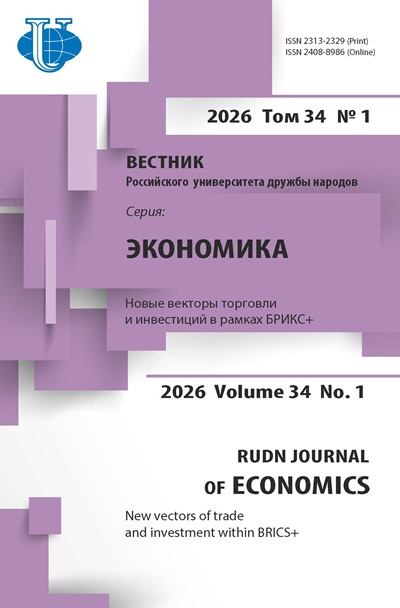
- Выпуск: Том 34, № 1 (2026): НОВЫЕ ВЕКТОРЫ ТОРГОВЛИ И ИНВЕСТИЦИЙ В РАМКАХ БРИКС+
- Страницы: 24-44
- Раздел: Экономика развитых и развивающихся стран
- URL: https://journals.rudn.ru/economics/article/view/50619
- DOI: https://doi.org/10.22363/2313-2329-2026-34-1-24-44
- EDN: https://elibrary.ru/UHPSTN
- ID: 50619
Цитировать
Полный текст

Аннотация
Исследование посвящено анализу роли БРИКС в формировании многополярной архитектуры международных отношений. Основное внимание уделено экономическим и геополитическим функциям альянса, в частности его роли как платформы для сопряжения цивилизаций и смягчения глобальных противоречий. Возрастающая напряженность в системе международных отношений и повсеместная эскалация конфликтов вынуждает говорить об инструментах, институтах и объединениях, которые имеют прямую или косвенную возможность влиять на стабилизацию и урегулирование глобальных противоречий. Проактивная социально-экономическая и политическая инклюзивная экспансия БРИКС, которая распространяется в контур разлома цивилизаций, уже сегодня может формировать альтернативные центры региональной силы, постепенно сближающие противоборствующие державы. Целью исследования является выявление влияния цивилизационных факторов на геополитическую ситуацию и определение роли БРИКС в формировании нового мирового порядка через интеграционные социально-экономические процессы. Применены аналитические методы для изучения теоретических основ, методы систематизации и контент-анализ для обработки публикаций и данных. Использованы также сравнительный анализ для выявления особенностей БРИКС относительно западных альянсов, дедукция и индукция для создания целостной модели влияния альянса на мировую политику. Определено, что БРИКС играет важную роль в продвижении процессов дедолларизации, предоставлении финансовых ресурсов через Новый банк развития и укреплении позиций стран-участников в международной системе. Установлено, что альянс активно способствует сближению цивилизаций благодаря транспарентному и толерантному партнерству. Анализ показал, что архитектура сотрудничества БРИКС вызывает интерес у стран не-Запада благодаря справедливому и равноправному подходу, что приводит к росту числа желающих присоединиться к альянсу. Активизация форумов, создание координирующих институтов и укрепление экономических связей делают БРИКС важным элементом международной политики. Анализ геополитических процессов демонстрирует, что расширение БРИКС происходит преимущественно в зонах цивилизационных разломов, идентифицированных С. Хантингтоном, при этом альянс включает представителей 6 из 8 основных цивилизаций (Православной, Синской, Индуистской, Латиноамериканской, Исламской и Африканской). Установлено, что в отличие от западных объединений с выраженным лидерством США, в БРИКС функционирует полицентричная модель принятия решений, требующая достижения консенсуса между всеми участниками, что создает институциональные предпосылки для смягчения межцивилизационных противоречий. Выявлено, что Новый банк развития, одобривший к концу 2023 г. кредиты на 32,3 млрд долл. без политических условий, формирует альтернативную модель международного финансирования, способствующую экономической конвергенции государств различных цивилизаций. Особую значимость приобретает стратегия «инклюзивной экспансии» БРИКС, при которой в альянс принимаются страны, находящиеся в потенциальной или актуальной конфронтации (Индия - Пакистан, Иран - Саудовская Аравия, Египет - Эфиопия), что создает платформу для диалога и экономического сотрудничества, снижающего конфликтный потенциал на линиях цивилизационного разлома.
Ключевые слова
Полный текст
Introduction The Deluge, generated by the hegemony of thalassocracies (marine civilizations), radically destabilized and destroyed the system of international relations. For many centuries, despite the geo- political cycles (for example, Kondratiev - Wallerstein), the civilizations of the sea have surpassed the civilizations of the land in their influence. Russia, as the core of the Heartland, the mainstay of Eurasia and the main historical and geographical representative of the body of bureaucracies, has been pursuing a policy of continental Eurasian strengthening since the end of the nineteenth century, striving to build a strong “axis” with other land civilizations. The policy of putting Russia in the “Anaconda ring” (the policy of political and economic deterrence), pursued by the West throughout modern history, has in every way hindered the tellurocratic integration process. At the beginning of the 21st century, the West’s desire to preserve unipolar dominance caused concern among a significant part of the world community, which prompted the Indian- Chinese elites to accept Russia’s proposal and begin active cooperation within the framework of the RIC. The initiatives of the RIC’s expansion across the Eurasian continent seemed effective at first, but today they have been fully implemented and exceeded all forecasts and expectations. BRICS has transformed into a transcontinental powerful economic association. The “Brick Alliance” became a system- like alliance, which mainly contributed to the formation of a multipolar world order, where regional centers of power became the main actors in international processes. Moreover, the civilizational sign (community of ethnicity, religion, language and culture) becomes the determining factor of relations between states. In the context of escalating conflicts around the world (Russia - Ukraine, Israel - Iran, Israel - Lebanon, India - Pakistan, China - Taiwan, Venezuela - Guyana, etc.), it is especially relevant to talk about the role of BRICS as a representative of several civilizations, expanding in the field of cultural and religious rift in order to mitigate the contradictions between the great Powers, despite the political and economic risks. Literature review BRICS research is formed at the intersection of political economics, international finance, and civilizational analysis and covers both institutional aspects and the empirical dynamics of the member economies. At the level of international institutions, attention to BRICS is linked to two cross- cutting themes: the representation and reform of the global architecture (including IMF quotas), as well as the formation of alternative financing channels for development. The IMF’s document on the 16th quota revision fixes the imbalance between the economic weight and voting rights of the BRICS countries, which gives additional legitimacy to the reform agenda. The annual report of the New Development Bank (NDB) indicates the practical institutionalization of the BRICS alternative financial infrastructure. The analysis of international centers, in particular the Carnegie Endowment review, highlights the combination of geo- economic and political institutional incentives that encourage countries in the Global South to consider BRICS as a platform for diversifying foreign economic relations and reducing political vulnerability. In the Russian academic and expert agenda, the role of BRICS in the transformation of the world order is systematized, including in works comparing the scenarios of the “sum of terms” and the system of the forming nature of the association. The theoretical and methodological basis of the research is formed by classical geopolitical concepts, in particular, the theory of confrontation between the maritime and continental powers (Gorshcharik, 2016), as well as fundamental works reflecting on the transformation of the world order after the end of the Cold War. Of key importance are the works of F. Fukuyama (Fukuyama, 1992) on the “end of history” and S. Huntington (Huntington, 1993, 1996) on the “clash of civilizations”, the latter of which serves as a conceptual framework for analyzing BRICS as a multicivilization association. The historical context of attempts to create continental blocks is revealed in the works of E.V. Tarle (Tarle, 1958), K. Haushofer (Haushofer, 2001), V.A. Dergachev (Dergachev, 2011) and V.E. Molodyakov (Molodyakov, 2004). Modern BRICS research covers a wide range of issues. The historical stages and the political role of unification in the formation of a multipolar world are analyzed in the works of V. Belov (Belov, 2024), A.G. Senokosov (Senokosov, 2012) and O. Shtuenkel (Stuenkel, 2020). The issues of institutionalization, security and network interaction are considered by A. Abdenur (Abdenur, 2017), D.A. Panova (Panova, 2024) and D. Kuznetsov (Kuznetsov, 2020). The BRICS economic agenda, including the role of the New Development Bank and the prospects for de- dollarization, is the subject of study by P.N. Batista Jr. (Batista Jr, 2023), V. Daldegan and V. de Borba (Daldegan, de Borba, 2023), A.D. Kostarev (Kostarev, 2020), as well as S.R. Esenbayeva and A.V. Kuznetsov (Esenbaeva, Kuznetsov, 2024). The civilizational dimension of unification, its “soft power” and spiritual and moral values are explored in the works of V.M. Kapitsyn (Kapitsyn, 2015), A.A. Konkin and I.V. Romanova (Konkin, Romanova, 2021), A.P. Markov (Markov, 2024) and A.N. Mikhaylenko (Mikhaylenko, 2024). The challenges and opportunities associated with the recent expansion of the alliance are reflected in the works of F.D. Yiblet (Yiblet, 2024) and in the Clingendael Policy Report (Bunskoek & Verburg, 2025), which emphasises the grouping’s pragmatic foundation in “shared utility” rather than shared values. The empirical basis for this analysis comprises official BRICS declarations, summit communiqués, and data from international organisations such as the New Development Bank, the IMF, and the World Bank. Despite the recognition of the multicivilizational nature of BRICS, the literature has not sufficiently investigated the mechanism by which this civilizational pluralism is transformed into a tool for mitigating global contradictions. This study aims to fill this gap by analyzing BRICS as a center of purposeful integration of civilizations. Materials and methods The information base of the research was the works of various foreign and domestic thinkers, such as the works of S. Huntington (Huntington 1993, 1996), H. Mackinder (Mackinder, 1904), E. Tarle (Tarle, 1958), O. Spengler (Spengler, 1993), A. Toynbee (Toynbee, 2022), F. Fukuyama (Fukuyama, 1992) et al., as well as analytical documents, reports of international organizations and materials from the IMF, the United Nations, the World Bank, the ILO, the Central Bank of the Russian Federation, the Take- Profit exchange portal, the statistical portals the GlobalEconomy, ZhujiWorld, Worldometer, Statista and TradingEconomics, corporate The Knoema database, a joint statistical publication of the BRICS countries, allows a quantitative analysis of current socio- economic indicators of the BRICS member states. Special attention is paid to the BRICS Economic Partnership Strategy until 2025, which defines the key areas of cooperation and the goals of the alliance. The object of the analysis was the geopolitical processes in which the BRICS countries participate, including their interaction and influence on the course of these processes and the formation of the world order. The following methods were used in the study: analytical methods to evaluate the theoretical foundations and concepts related to the BRICS and geopolitical changes, systematization methods to organize and classify the data and information obtained, content analysis to study publications and official documents related to the activities of the BRICS and international relations, comparison methods to identify differences and similarities in the approaches of BRICS and Western alliances, deduction and induction to build a holistic model of understanding the role of BRICS in the context of global and regional changes, generalization methods for drawing conclusions based on the collected data and analysis. Results and discussion Theoretical and historical background of the formation of BRICS The historical confrontation between the civilizations of land (tellurocracies) and sea (thalassocracies) is the cornerstone of geopolitics and geo- economics. After the era of the domination of continental empires, the rise of maritime powers began in the 15th century, which reached its peak in the 19th and 20th centuries. Attempts to create continental blocs (for example, the idea of S.Y. Witte on the union of Russia, France and Germany (Tarle, 1958) or the geopolitical project “Berlin - Moscow - Tokyo” by K. Haushofer (Haushofer, 2001; Gorshcharik, 2016; Molodyakov, 2004) were aimed at restoring the balance of power but were unsuccessful. The Versailles- Washington system of international relations, which developed after World War II, was structured under the auspices of the ideological struggle between capitalism and communism, the civilizations of land and sea, West and East, the World Island and the Heartland. This confrontation actually projects onto modern history the principle of “duality of civilizations”, which was described by H. In 1904, in the work “The geographical axis of history” by Mackinder (Mackinder, 1904). The end of the Cold War and the collapse of the Soviet Union led to the establishment of a unipolar world order led by the United States (Belov, 2024). This moment was understood by F. Fukuyama as the final victory of the Western Model and the “end of history” (Fukuyama, 1992). In contrast to this concept, S. Huntington put forward the theory of “clash of civilizations”, according to which future global conflicts will be determined by cultural, religious and historical differences (Huntington, 1993, 1996). He argued that the world is moving towards a multipolar and multicivilization system, where the key actors will not be individual states, but integration blocs. The Russian leadership of the 90s, despite its pro- Western views, was already aware that hoping only for partnership with the United States for such a potentially powerful country was fundamentally the wrong policy. In this regard, first in 1994, the Chairman of the Russian State Duma, I.P. Rybkin, and then in 1998, the Head of the Russian Foreign Ministry, E.M. Primakov, proposed the creation of a “strategic triangle” of the RIC (Russia - India - China). but Indian- Chinese disagreements hinder the process. The events in Kosovo (1999) significantly changed the situation, after which E.M. Primakov completed his famous “Atlantic U-turn”. The Primakov Loop, firstly, showed the whole world that Russia’s policy must be reckoned with, and secondly, it made it clear to non- Western countries that it is necessary to maintain global stability and observe the fundamental principles of international law, rather than defending only their interests, extracting short- term political and economic benefits (Grinivetskiy, 2024b). It benefits from being a tool for implementing the strategic beliefs of the West. The United States’ desire to become a total hegemon on the global stage has crossed the boundaries allowed by the world community and alarmed the global majority. The events in Afghanistan (2001) and Iraq (2003) forced the Indian- Chinese partners to seriously consider integration (Grinivetsky, 2024a). In 1999-2001, the active discussion of cooperation within the framework of the RIC resumed, where all 3 states had already shown interest (Senokosov, 2012). Russia, India and China did not stop at strengthening Eurasian continentalism and began integration with Brazil. In 2009, the partnership relations were given official status and the BRIC bloc was formed, and in 2011, after the accession of South Africa, the union was transformed into BRICS. In the following years, BRICS has been actively developing and strengthening its trade and economic ties. During this period, the world order has undergone a profound transformation. The concept of a multipolar and transcontinental world turns out to be real and feasible (Grinivetsky, 2024b). The BRICS Alliance is becoming a leading player in the global arena. Today, BRICS has 10 member states (Brazil, Russia, India, China, South Africa, Iran, Ethiopia, Egypt, UAE, Indonesia) and more than 20 potential participants. It is noteworthy that Huntington’s works are only increasing their relevance, since it is on the borders of the ethnic, linguistic, and cultural- religious division of civilizations that the escalation of armed conflicts is increasingly evident today: Ukraine - Russia - Western- Orthodox civilizations, Israel - Palestine, Israel - Iran, Israel - Lebanon (and others Middle Eastern countries) - Western- Islamic civilizations, India - Pakistan - Hindu- Islamic civilizations, Venezuela - Guyana - Western- Latin American civilizations, Indo- Chinese - The Hindu- Sin civilization, the Taiwan - China - Western- Sin civilization crisis. As you can see, the pro- Western dictatorship has greatly distorted the balance of power in the international arena. Non- Western civilizations are strengthening and increasingly defending their historical borders. This trend underlies the modern processes of the formation of a multipolar world order (Konkin, 2021; Markov, 2024). It is worth noting that the role of BRICS in these geopolitical processes is enormous, although not immediately noticeable. To understand the influence of the “brick alliance” on the formation of the world order, one must recall the effectiveness of the pro- Western policy of “soft power” (de facto “smart power”) in the late twentieth and early twenty- first centuries, which consisted in obtaining desired results on the world stage through financing and creating an attractive image of one’s own culture and politics. and values. If the West acted exclusively in its own interests, then the distinguishing feature of the “soft power” from the BRICS is its mission - to maintain a transparent and equal dialogue with all actors in the international arena in order to form a license - based world order[11]. Comparative economic analysis, global governance imbalances, and BRICS institutional and civilizational flexibility The reliability of the BRICS mission, goal- setting, and political and economic orientations is emphasized by the following key factors: 1. While the Western Bloc associations always have a pronounced leader - the United States (Table 1), which actually imposes the rules of the game on the “partners”, acting in order to preserve its hegemony, then the BRICS has at least 6 centers of power representing different civilizations (Russia - Orthodox, China - Chinese, India is Hindu, Brazil is Latin American, the United Arab Emirates, Saudi Arabia, Egypt, Indonesia and Iran are Islamic, Ethiopia and South Africa are African) and are catalysts of socio- economic development in their regions (Table 2). This suggests that for decision-m aking in BRICS, it is necessary to reach consensus among all members of the alliance, i.e. a true “balance of power’ is observed. Table 1 Differentiation of the economies of the G7 countries Countries Area, 1000 km² Population, million (2024) Population density, per km[12] GDP, trillion USD (2024) GDP per capita, USD GDP (PPP), trillion USD (2024) United Kingdom 245 67.7 276.3 3.5 51699 4.03 Germany 357 83.3 233.3 4.59 55102 5.69 Italy 301 58.9 195.7 2.33 39559 3.35 Canada 9984 38.8 3.9 2.24 57732 2.47 France 547 64.8 118.5 3.13 48302 3.99 Japan 378 123.3 326.2 4.11 33333 6.72 United States 9623 340 35.3 28.78 84647 28.78 Total (G7) 21435 776.8 132.1 48.68 41153 55.03 World totals 148940 8164 58 109.2 13376 185.737 Percentage of world totals, % 14.4 9.5 227.8 44.6 307.7 29.6 Source: compiled by I.I. Grinivetskiy on the basis of data from the exchange portal “Take-P rofit”[13], the statistical portals “theGlobalEconomy”[14], “Worldometer”[15], “Statista”[16] and “TradingEconomics”[17], the corporate database “Knoema”[18], a joint statistical publication of the BRICS countries[19]. Based on Table 1, it can be noted that the nominal GDP at current prices of the G7 countries is 43.5% of the global total, GDP by PPP is 29.9%, population is 9.5%, territorial area is 14.4%, and GDP per capita of the G7 is 3 times higher than the global average, which indicates high economic development countries of this association. It should also be noted that the population density in the G7 member States is 2.28 times higher than the global average. The United States is the clear leader among the countries of the union, second only to other members in terms of two indicators - the area of territories (Canada) and population density (all except Canada). Table 2 Differentiation of the economies of the BRICS countries Countries Area, 1000 km2 Population, million (2024) Population density, per km2 GDP, trillion USD (2024) GDP per capita, USD GDP (PPP), trillion USD (2024) Brazil 8512 216.4 25.4 2.33 10767 4.27 Russia 17275 147.4 8.5 2.06 13976 5.5 India 3288 1429 434.6 3.94 2757 14.6 China 9600 1426 148.5 18.53 12994 35.29 South Africa 1221 60.6 49.6 0.373 6155 1.02 Egypt 1001 113 112.9 0.348 3080 1.9 Iran 1648 89.2 54.1 0.464 5202 1.85 UAE 83 9.52 114.7 0.527 55357 0.95 Ethiopia 1127 127 112.7 0.163 1283 0.43 Indonesia 1905 282.5 148.3 1.49 5274 4.72 BRICS 39896 3279.4 133.3 27.233 9330 60.68 Total (BRICS+) 45660 3900.6 120.9 30.225 11684.6 70.53 BRICS+/BRICS, % 114.4 118.9 90.7 111.0 125.2 116.2 World totals 148940 8164 58 109.2 13376 185.737 Percentage of world totals, % 30.7 47.8 208.5 27.7 87.4 38.0 Source: compiled by I.I. Grinivetskiy on the basis of data from the exchange portal “Take-P rofit”[20], the statistical portals “theGlobalEconomy”10, “Worldometer”11, “Statista”1[21][22][23][24] and “TradingEconomics”[25], the corporate database “Knoema”[26], a joint statistical publication of the BRICS countries[27]. The total territory of the BRICS+ countries increased by 15.2% and reached 45.7 million km2, which is 31% of the world’s land area. The population has grown to 3.9 billion people (44.7% of the global figure), and the population density (121 people km2) is almost twice the global average. The economic indicators of the union are also showing significant growth. The nominal GDP of the BRICS+ countries amounted to $30.2 trillion (28.6% of global GDP), of which $27.2 trillion accounted for the original countries of the bloc. After the new members joined, GDP per capita increased by 51.8% and reached $11.7 thousand, remaining below the global average ($13.4 thousand). However, the UAE ($55.4 thousand) and Russia ($14 thousand) show higher values. China ($18.5 trillion), India ($3.9 trillion) and Russia ($2.1 trillion) remain the leaders in total GDP. However, the lower GDP per capita in most BRICS countries ($11.7 thousand on average for BRICS+ versus $41.1 thousand in the G7) indicates that the economic weight of the alliance is based on scale rather than technological leadership and high labor productivity. This determines both the long- term growth potential and the current vulnerability associated with the need for structural reforms and technological modernization (Grinivetskiy, 2024b). It is worth saying that BRICS makes a significant contribution to the global economy. The role of the association in international economic processes is mainly related to the production of strategically important resources, low- and medium- complexity manufacturing products, as well as providing multinational companies with affordable labor. Within the framework of the current system, the BRICS countries face systemic imbalances, which are reflected in unfair compensation for their contribution to the development of the real sector of the global economy. This is a serious reason for reforming the established rules in the global financial environment. This implies a fair revision of IMF quotas in favor of fast- growing developing countries, increased trade in national currencies, and the creation of their own supranational regulatory institutions. In 2025 (16 revision), the total quota of the BRICS countries is 17.53% (China - 6.4%, India - 2.75%, Russia - 2.71%, Brazil - 2.32%, Iran - 0.75%, Indonesia - 0.98%, South Africa - 0.64%, UAE - 0.49%, Egypt - 0.43Ethiopia - 0.06%), and the G7 - 43.42% (USA - 17.43%, Japan - 6.47%, Germany - 5.59%, Great Britain - 4.23%, France - 4.23%, Italy - 3.16%, Canada - 2.31%). Even though the GDP in terms of PPP of the BRICS countries is already 28.2% higher than the corresponding indicator for the G7, the share of the BRICS countries in the IMF remains unfair in relation to their contribution to global economic development. 2. The BRICS association has an informal status, therefore, there are no formal mechanisms of coercion and pressure on the members of the union. Unlike Western institutions (such as NATO or the EU), which are dominated by strict contractual obligations, BRICS relies on the principles of voluntariness and consensus. This allows the participating countries to maintain their sovereignty in decision- making and avoid pressure from large economies. For example, within the framework of the BRICS Forum on Global Security in 2024, the need to respect national peculiarities and unobtrusive development models was emphasized, which corresponds to the concept of “soft power” of the alliance. This configuration has favorable macro and microeconomic consequences for the participating countries. First, the consensus procedure slows down decision- making and increases the danger of a “minimum common denominator”, which may limit the depth and speed of integration in complex issues (finance, standards, capital market). Secondly, the lack of strict enforcement is offset by the increased enforceability of commitments made: the low costs of inconsistency at the decision-m aking stage are replaced by a higher likelihood of bringing agreements to implementation, since they reflect a real “zone of intersection” of national interests. Thirdly, soft coordination encourages institutional experimentation and “piloting” in the formats of coalitions of stakeholders - from local currency lending and settlements to testing digital payment solutions - with the subsequent scaling up of successful practices. In this sense, the New Development Bank acts as an important mechanism for “positive coercion” through economic incentives: project covenants and financial conditions form a disciplining framework without political conditionality, which reduces the risks of non- fulfillment and ensures that integration initiatives are linked to measurable economic results. To minimize the costs of the consensus model, BRICS is consistently increasing its coordination tools without losing its sovereignty. The role of the rotating chairmanship as an “agenda setter” is being strengthened, procedures for mutual reviews and comparable indicators (“scoreboards”) are being developed in sectoral tracks, compatibility of disclosure, compliance and payment reporting standards is increasing, network “epistemic communications” are being formed in business and academic tracks, which reduces information asymmetries and transaction costs. As a result, the BRICS informality rationally correlates the speed and depth of integration with the political and economic heterogeneity of the participants: it reduces entry costs and risks of political confrontation, increases the stability of execution and creates space for step-b y-step institutional rapprochement through economic incentives and integration mechanisms, rather than through strict legal coercion. 3. While the Western IBRD (International Bank for Reconstruction and Development), the World Bank, and the IMF de facto lend and provide assistance to countries in order to form leverage over these geopolitical actors (i.e., they accompany financing with political demands), the New Development Bank, firstly, seeks to develop settlements in national currencies, and secondly, is really interested in the socio-e conomic progress of emerging centers of economic power by providing them with cheap loans, financing infrastructure projects and not burdening them with political obligations (Daldegan, de Borba, 2023; Kostarev, 2020; Panova, 2024). The New Development Bank, established in 2014, actively promotes a model of project financing without political conditionalities, which contrasts with the practice of the IMF and the World Bank. By the end of 2023, the NDB has approved loans worth $32.3 billion for 90 projects, including renewable energy, transport and urbanization, demonstrating its focus on the socio-e conomic progress of developing countries (for example, a $1 billion loan from South Africa to finance water supply and sanitation infrastructure). In addition, the NBR is actively developing settlements in national currencies: in 2024, the share of such transactions in the bank’s portfolio exceeded 40%, reducing dependence on the dollar and the euro. According to the Clingendael Institute’s analysis, BRICS membership offers emerging and developing countries several strategic advantages rooted in what the report terms “shared utility” rather than shared values. Key among these is the provision of “a seat at the table” - enabling participating states to articulate their preferences within a multilateral forum. The grouping also provides tangible alternatives to Western-l ed financial architecture: through the New Development Bank (NDB) and the Contingent Reserve Arrangement (CRA), members gain access to infrastructure financing and emergency liquidity support, which is particularly valuable for nations facing sanctions, currency instability, or debt distress. Furthermore, BRICS facilitates efforts to reduce perceived overreliance on Western-l ed institutions and the US dollar, while allowing countries to explore alternative approaches to multilateralism and development that may better align with their specific contexts. For many developing economies, the BRICS thus represents a pragmatic platform for enhancing strategic autonomy, diversifying economic partnerships, and accessing development finance with fewer political conditionalities - all within an increasingly multipolar global order16. 4. Under the risk of less stable and sustainable development, BRICS is actively expanding and accepting new members into its ranks, who may be in confrontation with existing participants (Stuenkel, 2020). On the one hand, this poses a threat to the socio- economic (Table 3) and political security of the association, but on the other, BRICS is blurring the contour of the clash of civilizations, seeking to include them in a common transcontinental integration process that will bring them closer (Markov, 2024; Mikhailenko, 2024). Let’s consider the options for civilizational coupling of potential and current BRICS members: Pakistan-I ndia - Islamic-H indu; Algeria-Morocco-Syria- Saudi Arabia-E gypt-UAE-Kuwait- Iran and Nigeria-E thiopia-South Africa-Uganda- Chad- South Sudan- Eritrea-Equatorial Guinea-S enegal-Zimbabwe - Islamic-A frican; Venezuela-B razil-Argentina-Cuba-Honduras- Nicaragua-Bolivia - rapprochement of Latin American civilizations; Russia-B elarus and Kazakhstan-Turkey - Orthodox- Islamic; Thailand-B angladesh, and India - Buddhist- Islamic-Hindu; China-I ndia - Sin- Hindu; Russia- China - Orthodox- Chinese. As we can see from Table 3, the expansion of the BRICS, in addition to increasing the nominal economic and demographic scale, has significant risks of the disintegrative impact of unstable economic systems on transcontinental convergence within the framework of the association. Serious inflation rates in Iran (36%), Egypt (29.8%) and Ethiopia (29%) hinder not only the full- fledged and stable economic development of these states, but also increase the volatility of their national currencies, which, in the context of the prioritization of trade in national currencies within the framework of the BRICS, significantly weakens the efficiency of export- import activities of these countries. This forces us to resort to using other reserve currencies and neglect de- dollarization initiatives, which so far have not had the proper real effect (Batista Jr., 2023; Esenbaeva, Kuznetsov, 2024). It should also be borne in mind that Ethiopia, although it is one of the strongest economies in Central Africa, but a small number of its international reserves indicates the impossibility of regulating financial stability by the Ethiopian Central Bank. Egypt and South Africa face the same problem. And combined with the huge external debt (relative to GDP) Brazil (38%), Ethiopia (21.5%), the United Arab Emirates (31%), India (18.7%), Egypt (34.3%) 16 Bunskoek, R., & Verburg, S. The BRICS and the Emerging Order of Multipolarity. Retrieved 30 Jun 2025 from https://www.clingendael.org/sites/default/files/2025-05/BRICS_Emerging_Order_ Multipolarity.pdf and the unstable military and political situation in Russia, Iran, Ethiopia, Brazil and Egypt pose a great threat to the realization of that socio- economic potential the “brick” alliance, which is discussed from summit to summit. Table 3 Key macroeconomic indicators of the BRICS countries Brazil 6508 6802 104.5 4.51 7.6 728181 343500 Russia 234 251 107.3 7.4 2.9 327000 585448 India 177 186 105.1 5.1 6.8 635324 567298 China 104 103 99.0 -1 5.2 2452800 3306839 South Africa 107 113 105.6 5.3 32 156096 60553 Egypt 149 193 129.5 29.8 6.9 164728 32143 Iran 161 226 140.4 36 7.6 6282 122000 UAE 106.5 106.2 99.7 0.44 3 158000 138433 Ethiopia 333 423 127.0 29 4 28000 3046* Indonesia 102 105 102.9 2.9 4.82 425 137000 *Data on Ethiopia’s international reserves for 2020. Source: Compiled by I.I. Grinivetskiy on the basis of data from the Central Bank of the Russian Federation[28], the exchange portal “Take-P rofit”[29], the statistical portals “theGlobalEconomy”19, “Worldometer”[30][31][32]0, “Statista”[33] and “TradingEconomics”[34], the corporate database “Knoema”[35], a joint statistical publication of the BRICS countries[36]. 5. The Non- Western world and the BRICS members are concerned about the crises of the financial architecture of the world and are actively discussing the creation of a new currency and developing a single independent and apolitical (unlike SWIFT) payment system (BRICS Pay, BRICS Bridge), considering the interests of all participants in this de- dollarization process. The BRICS states are making serious plans to restructure the global economic system on a fair basis: there are talks about creating a common economic space, simplifying financial transactions, a new investment platform to support national economies and countries of the global South and East, and a depository system (accounting for securities in the BRICS countries - BRICS Clear), a grain exchange (protecting markets from attacks by speculators and artificial scarcity) and an exchange for trading precious metals and diamonds (creating a fair competitive mechanism based on exchange principles). Methodologically, it is important to distinguish between financial message transmission systems (the level of standardized communication between banks, as exemplified by SWIFT and its analogues) and proprietary settlement/clearing (transfer of liquidity, finalizing obligations, and risk management): the BRICS focus is shifted towards practical steps for local currency settlements and the creation of channels with reduced political vulnerability (Batista Jr., 2023; Esenbaeva, Kuznetsov, 2024; Bunskoek, Verburg, 2025). Cross- border settlements based on central bank digital currencies (CBDCs - Central Bank Digital Currency) and multi-CBDC platforms are being tested as a technological area; the experience of the mBridge project with the participation of the UAE and China is indicative, demonstrating the potential to reduce costs and shorten payment processing time, subject to legal compatibility and mature cybersecurity standards. However, scaling mCBDC solutions will require synchronization of regulation, data protection regimes, and operational risk management procedures. These initiatives are designed to reduce the cost of access to capital, create alternative price benchmarks and increase the sustainability of critical supply chains; at the current stage, we are talking about roadmaps and pilots, sustainable liquidity requires the participation of large international traders, coordination of regulatory regimes and building a reliable clearing and management infrastructure. In the short term, it is appropriate to expand the NBR’s LCY (Local Currency) instruments and related hedging products in national currencies, develop a network of central banks’ bilateral swap lines along priority trade corridors, modernize communication standards, and launch bilateral netting schemes for obligations with agreements on mutual recognition of KYC/ AML (Know Your Customer / Anti- Money Laundering) procedures. In the medium term, the key milestones are the launch of limited multilateral netting clearing (with settlements in LCY or through neutral “anchor” currencies of the BRICS countries, the initial interoperability of individual CBDC platforms for settlements on critical commodity chains, pilots of the depository and clearing infrastructure for cross- border securities transactions and commodity auctions with settlements in national currencies and a transparent pricing methodology. In the long term, it is possible to scale multilateral clearing, transition from pilot recruitment to stable markets with deep liquidity, and, if economically feasible, introduce a synthetic unit of account based on a basket of currencies and/or commodities as an accounting unit that is not identical to a “supranational currency” and does not require immediate monetary centralization. At the same time, the main projects and initiatives belong to Russian experts and scientists. 6. The BRICS countries act as regional leaders, representing the interests of various regions such as the CIS, Southeast Asia, South Asia, Latin America and Africa. These states have significant influence on events in their regions and, with the help of BRICS, actively pursue relevant policies in the international arena (Kuznetsov, 2020). This is reflected in the institutional connection with regional associations (AU (African Union) / AfCFTA (African Continental Free Trade Area) through South Africa and Egypt, MERCOSUR (Mercado Común del Sur / Southern Common Market) through Brazil, EAEU (Eurasian Economic Union) / CIS (Commonwealth of Independent States) and SCO (Shanghai Cooperation Organisation) through Russia, SAARC (South Asian Association for Regional Cooperation) / BIMSTEC (Bay of Bengal Initiative for Multi- Sectoral Technical and Economic Cooperation) and the SAGAR (Security And Growth for All in the Region) initiative through India / ASEAN (Association of Southeast Asian Nations) and BRI (Belt and Road Initiative) (“Belt and Road”) / AIIB (Asian Infrastructure Investment Bank) through China, GCC (Gulf Cooperation Council) and OPEC+ (Organization of the Petroleum Exporting Countries plus other major non-OPEC oil- producing countries) through Saudi Arabia and the United Arab Emirates, IGAD (Intergovernmental Authority on Development) / AU (African Union) through Ethiopia.); implementation of cross-border infrastructure corridors (for example, the INSTC (International North-South Transport Corridor) of the Russian Federation-Iran- India, energy coordination in OPEC+, port logistics hubs of Egypt and the United Arab Emirates); using development tools (NBR, local currency financing), which reduces transaction costs and currency risks for regional partners. 7. The multicivilizational composition of the BRICS acts not only as a symbolic, but also as an institutional resource of the alliance: the accumulated experience of the coexistence of various cultural and historical traditions is transformed into a set of compatibility norms (respect for sovereignty, non- interference, consideration of national specifics, equality), which is formalized in the BRICS Economic Partnership Strategy until 2025 and supported by mechanisms of regular “socialization” of elites in specialized tracks - business, academic and expert. Such a regulatory framework has a direct economic dimension. It reduces the transaction costs of interstate cooperation (search for a counterparty, standard approval, enforcement), generates trust capital and, as a result, reduces the risk of contract “capture” and regulatory uncertainty in cross- border projects. The repeatability of contacts within the BRICS Business Cooperation Council, the Business Forum, the Council of Analytical Centers (BTTC), and the Academic Forum creates “epistemic communities” that develop agreed expectations and procedures, from compliance and data exchange to approaches to resolving contentious issues, which expands the possibilities of long- term contracting and joint investments. A polycentric, consensus- based management model focused on institutional pluralism reduces the likelihood of imposing single «universal» prescriptions and thereby reduces the risk of politically motivated gaps in cooperation; economically, this translates into a lower premium for country risk in projects involving participants from several BRICS jurisdictions, greater stability of supply chains, and better predictability of the regulatory environment for businesses. In comparison with approaches that strictly link financing and trade to political conditions, BRICS’ emphasis on sovereign equality, transparency, inclusivity, and mutual benefit creates a more acceptable incentive structure for partners and reduces the likelihood of a “political shock” to economic transactions, which is especially important for countries with unstable institutions (Mikhailenko, 2024). In the long term, intercivilizational cooperation creates an additional “portfolio” effect due to the diversification of macrocycles and supply/demand shocks between the regions represented in the BRICS. This reduces the correlation of risks and improves the parameters of the distribution of returns in joint projects, increasing their banking and market financiability. An additional channel is the development of a “soft infrastructure” - comparability of statistics, harmonization of disclosure standards, KYC/AML procedures, and data protection - that increases transparency and reduces monitoring costs for financial institutions. The combination of these mechanisms allows us to interpret the BRICS value and regulatory framework as an economic asset: it ensures the accumulation of social capital between different civilizational communities, which is converted into an increase in the likelihood of successful implementation of cross-border projects and into a reduction in the cost of capital by reducing institutional uncertainty. Thus, the BRICS intercivilizational dimension, being fixed in strategic documents and reproduced through regular interaction formats, performs the function of reducing coordination costs and political and regulatory risks, which is an important condition for increasing trade, investment and joint innovation in a diverse and coordinated institutional environment. This approach distinguishes the “brick alliance” from Western paternalistic associations with a colonial past (Kapitsyn, 2015). In addition to the factors listed above, in the medium and long term, it is the BRICS countries that will become the pacemaker of the global economy. This is due to the fact that the alliance represents vast territories saturated with an abundance of strategically important resources and cheap labor, with fully unrealized human capital and untapped production facilities. If the BRICS can transform from a “trader” of raw materials and low- value-added products to a developed geo- economic association, the countries of which will create comfortable and competitive working conditions, a proper technological base, high- quality structural (minimizing sectoral distortions, especially towards the raw materials sector) and regional policy (reducing the polarization and differentiation of regional development) contributing to an even and sustainable national prosperity, this will create a springboard for the formation of truly effective supranational institutions. The combination of these components will make it possible to launch a global “multiplier effect” that will become the engine of intercivilizational socio- economic development. According to Y. Lissovolik: “In order to enhance the multiplicative effects, the BRICS+ integration integration platform should be based on alliances capable of scaling and establishing links with other regional blocs (i.e., on regional alliances capable of ‘globalization’)” (Lissovolik, 2023). It is necessary to take into account the fact that the BRICS countries are still in trade and economic dependence on Western countries. Mutual trade between the members of the brick alliance accounts for only 6% of their total trade, despite the fact that total exports account for 20.7% of the global total. In such circumstances, the “bricks” of the union clearly need to strengthen export- import cohesion in order to have proper trade and economic sovereignty when making political decisions and implementing announced initiatives. Conclusion In the context of the representation of the world majority by non- Western countries, the architecture of building BRICS international policy, which corresponds to the provisions stated in the Strategy 2025, is objectively attractive for non- Westerners. More and more countries want to join the BRICS, and demand for loans from the NBR and de- dollarization processes is growing. Tolerant, transparent and equal partnership attracts civilizations, which softens their relationship, behind the scenes, but systematically preventing the escalation of large- scale international conflicts. The active holding of summits and forums with an annual increase in participants, the creation of institutions that coordinate their activities with other international organizations and real assistance in the development of emerging centers of economic power strengthens the BRICS positions on the global stage and contributes to the formation of a polycentric world order. At the same time, it is necessary to take into account the fact that the association has a lot of work to do to form and declare a clear mechanism for implementing the declared extensive guidelines, strengthen geopolitical and geo- economic rapprochement in the context of turbulence in the system of international relations, and implement its own projects (payment system, unit of account/currency, depository system, an investment platform, an exchange for ensuring fair trade in strategically important resources) in global economic processes, innovative intensification of national economic systems in order to offset the outflow of capital and labor to unfriendly jurisdictions, reform existing supranational institutions in order to develop fair monetary, financial and trade standards that will ensure global inclusive and sustainable development rather than being tools for maintaining Western hegemonism. In economic terms, BRICS represents a new center of global growth, which is confirmed by quantitative indicators: the combined share of the expanded association in global GDP at purchasing power parity has reached 38%, which is significantly higher than the equivalent figure for the G7 countries (29.6%). However, the influence of the Bretton Woods institutions is not equivalent to the BRICS’ real contribution to the global economy. The BRICS’ total quota in the IMF remains at 17.53%. This institutional imbalance serves as a fundamental incentive for building an alternative financial architecture. Nevertheless, the internal integration potential of the BRICS is limited by objective factors: a low level of mutual trade, not exceeding 6% of the total trade turnover of the participating countries, and significant macroeconomic heterogeneity, aggravated after the last expansion due to countries with high inflation and debt burden. At the same time, the consensus procedure inevitably limits the speed of decision- making on complex issues (finance, standards, capital markets), which requires compensatory implementation mechanisms - the role of the NBR as the anchor institution of project finance in LCY, a wide network of bilateral swap lines for key trading pairs, and the launch of pilot multilateral clearing with netting and the gradual interoperability of individual CBDC platforms in critical commodity chains. The concepts of payment interoperability (BRICS Pay/Bridge), custody and clearing infrastructure (conditionally BRICS Clear) and commodity areas with settlements in LCY seem economically feasible when linked to real flows, neutral jurisdiction and compliance with international standards ISO 20022 and FATF; in the long term, it is possible to introduce synthetic a unit of account based on a basket of currencies/ commodities as an accounting benchmark without immediate monetary centralization. BRICS is already comparable to the G7 in terms of real economic scale (GDP by PPP) and has significant demographic and resource potential, but its conversion into sustainable financial and economic autonomy requires deepening internal trade and production cooperation, accelerated development of payment and clearing institutions and mechanisms for smoothing macroeconomic heterogeneity. The most feasible trajectory seems to be the consistent integration of the “three contours”: increasing the share of mutual trade and production cooperation in sectors with high multiplier and import- substituting potential; scaling local currency instruments (central bank swap lines, multilateral netting, LCY hedging, NBR guarantee windows) and interfacing a payment infrastructure with real commodity and investment flows; institutional coordination through comparable indicators and mutual reviews in sectoral tracks to reduce information asymmetries and transaction costs. If these conditions are met, we can expect an increase in the share of settlements in national currencies, a reduction in the cost of capital, an increase in the stability of supply chains and, as a result, a strengthening of the BRICS role as one of the centers of the emerging polycentric world order. Thus, BRICS is not just an economic association, but also an important political actor contributing to the creation of a more equitable and balanced international system. BRICS forms “geopolitical communication corridors” that promote “energy and civilizational exchange”. In this context, his role in mitigating conflicts and maintaining world order will continue to grow, making him an indispensable figure on the global chess board of the 21st century.Об авторах
Игорь Игоревич Гринивецкий
Национальный исследовательский университет «Высшая школа экономики»
Автор, ответственный за переписку.
Email: grin_2003@rambler.ru
ORCID iD: 0009-0008-8712-8109
SPIN-код: 4853-6779
факультет мировой экономики и мировой политики
Российская Федерация, 101000, Москва, ул. Мясницкая, д. 20Руслана Петровна Сторожук
Филиал Московского государственного университета имени М.В. Ломоносова в городе Севастополе
Email: storozhukrp@my.msu.ru
ORCID iD: 0009-0002-0585-4999
SPIN-код: 8269-6076
кандидат политических наук, доцент кафедры экономики и управления
Российская Федерация, Севастополь, 299000, ул. Героев Севастополя, д. 7Список литературы
- Abdenur, A. (2017). Can the BRICS cooperate on international security? International Organisations Research Journal, 12(3), 73–93. https://doi.org/10.17323/1996-7845-201703-73 EDN: YLCXMD
- Batista Jr, P.N. (2023). A BRICS currency? Modern World Economy, 1(3), 129–135. https://doi.org/10.48612/wem/2023.3.6
- Belov, V. (2024). BRICS — another sum of components or a prototype of the future world order? National Priorities of Russia, (3), 24–32. EDN: MAUMOC
- Daldegan, V., & de Borba, V. (2023). BRICS development vision: Analysis of NDBfinanced projects. International Organisations Research Journal, 18(4), 7–33. https://doi.org/10.17323/1996-7845-2023-04-01
- Dergachev, V.A. (2011). Geopolitical theory of large multidimensional spaces. Esenbaeva, S.R., & Kuznetsov, A.V. (2024). Dedollarization and BRICS’ monetary and financial cooperation. World Economy and World Finance, 3(1), 62–68. https://doi.org/10.24412/2949-6454-2024-0080
- Fukuyama, F. (1992). The End of History and the Last Man. Free Press.
- Gorshcharik, A.G. (2016). The dualism of land and sea is the basic law of geopolitics: K. Haushofer’s ideas and the battle for the World Island (Eurasia). Electronic Bulletin, (1), 106–109.
- Grinivetsky, I.I. (2024a). The BRICS as a centre for the formation of a multipolar world. Young researcher: Proceedings of the All-R ussian Student Conference, 167–170. Lipetsk: Lipetsk State Technical University. EDN: EOATQM
- Grinivetsky, I.I. (2024b). Osnovnye etapy razvitiya sotrudnichestva BRICS. In: Society and personality: modern trends and historical approach, 34–39. Moscow: Moscow State Technical University of Civil Aviation. EDN: QHBSXR
- Haushofer, K. (2001). Geopolitika: izbrannye raboty [Geopolitics: Selected Works]. Moscow: Mysl’ publ. pp. 371–418.
- Huntington, S.P. (1993). The clash of civilizations? Foreign Affairs, 72(3), 22–49. https://doi.org/10.2307/20045621 EDN: BOCJXP
- Huntington, S.P. (1996). The Clash of Civilizations and the Remaking of World Order. Simon & Schuster.
- Kapitsyn, V.M. (2015). M. (2015). Soft power of BRICS. In V.I. Gerasimov (ed.), Rossiya: tendencii i perspektivi razvitiya. Ezhegodnik: materiali XV Mezhdunarodnoi nauchnoi konferencii “Modernizaciya Rossii: klyuchevye problemy i resheniya” 20–21 dekabrya 2018 g., Moskva. (pp. 510–513). Moscow: INION RAN publ. EDN: UDCYBJ
- Konkin, A.A., & Romanova, I.V. (2021). The BRICS countries: A new platform for multilateral interaction of cultures and civilizations. Transbaikal State University Journal, 27(7), 78–87. https://doi.org/10.21209/2227-9245-2021-27-7-78-87 EDN: QNYSLI
- Kostarev, A.D. (2020). The New Development Bank of BRICS as an international instrument for economic support of infrastructure projects. In Global economy in the 21st century: the role of biotechnology and digital technology, 137–138. KONVERT.
- Kuznetsov, D.A. (2020). Network texture of world politics: Transregionalism of BRICS. World Economy and International Relations, 64(11), 124–131. https://doi.org/10.20542/01312227-2020-64-11-124-131 EDN: JJUNLA
- Lissovolik, Ya.D. (2023). BRICS-Plus: The new force in global governance. Journal of International Analytics, 14(1), 138–148. https://doi.org/10.46272/2587-8476-2023-141-138-148 EDN: PHOOQA
- Mackinder, H.J. (1904). The geographical pivot of history. The Geographical Journal, 23(4), 421–437.
- Markov, A.P. (2024). BRICS as a civilizational alternative to Western hegemony: Problems and resources of solidarity of peoples and cultures (based on materials of the XXII international Likhachev scientific readings). The Bulletin of Moscow State University of Culture and Arts, (4), 128–138. http://doi.org/10.24412/1997-0803-2024-4120-28-38
- Mikhailenko, A.N. (2024). Spiritual and moral values in the BRICS countries. Ethnosocium and International Culture, (4), 71–80. EDN: MLHWZL
- Molodyakov, V.E. (2004). The failed axis: Berlin — Moscow — Tokyo. Veche publ.
- Panova, D.A. (2024). Features of institutionalization of financial and economic cooperation of the BRICS countries. Economy and Business: Theory and Practice, 4–3, 46–49. https://doi.org/10.24412/2411-0450-2024-4-3-14-17
- Senokosov, A.G. (2012). BRIC — a new format of integration of the countries — leaders of the developing world. RSUH/RGGU Bulletin. Series: Political Science. History. International Relations, (7), 153–162.
- Spengler, O. (1993). Zakat Evropy. Rostov- on-Don: Feniks publ. (Original work: Der Untergang des Abendlandes, 1918–1922)
- Stuenkel, O. (2020). BRICS and the Future of Global Order (2nd ed.). Lexington Books. https://doi.org/10.5040/9781978730687
- Tarle, E.V. (1958). Works: in 12 volumes. Vol. 10. Publishing House of the Academy of Sciences of the USSR.
- Toynbee, A.D. (2022). Civilization on Trial: Collection of Scientific Works. Academic Project.
- Yiblet, F.D. (2024). Unlocking new opportunities: BRICS Partnership and its implications for economic development in African countries. Journal of Entrepreneurship and Business Innovation, 11(1), 37. https://doi.org/10.57235/jebi.v11i1.352 EDN: UHPSTN
Дополнительные файлы

