Pennsylvania State University, Philadelphia, United States
Email: asc16@psu.edPersonal URL: 
Scopus Author ID: 24474429900
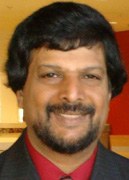
Edwin Erle Sparks Professor
Departments of Applied Linguistics and English
Director, Migration Studies Project
He adopts a sociolinguistic research orientation and draws from cultural studies and postcolonial discourse for interpretive insights. He has conducted ethnographies and discourse analyses of English in a range of contexts, producing a rich body of scholarship that appears in leading journals in applied linguistics, literacy, and sociolinguistics.
Early in his career, he did research on English/Tamil bilingualism in Sri Lanka, exploring how local people develop code alternation strategies and mixed codes to negotiate the conflicts inherent in identity and community membership. Having published these studies in journals of the caliber of Language in Society and Multilingua, he considered the social and educational prospects in English for periphery communities in Resisting Linguistic Imperialism in English Teaching (Oxford University Press, 1999). In this book he draw from everyday strategies of appropriating English according to local values and interests to argue against the deterministic view that local people are powerless against hegemonic impositions. This book won the MLA’s Mina Shaughnessy Award in 2000.
Another strand of his research explores the challenges for multilingual scholars in English academic communication. He has analyzed the strategies of writers in relation to local scholarly cultures and rhetorical traditions. In A Geopolitics of Academic Writing (University of Pittsburgh Press, 2002), he argues for an understanding of divergent rhetorical structures and writing practices so that knowledge construction in the academy can be pluralized. He also attempts to make a space in academic literacy for the multivocal texts of local scholars as they negotiate competing discourses. This publication won the Gary Olson Award from the Association for the Teachers of Advanced Composition for the best book on social and rhetorical theory in 2003.
In his more recent work, he considers the new forms of globalization that lead to fluid discursive and linguistic practices between communities.
Currently, he is transcribing interview data he collected from Tamil immigrants in London, Toronto, and California to understand the new identities in English for diaspora communities.